KI-Beratung Beta

Gutscheinbedingungen

**Gültig bis 11.11.2026 auf Spielzeug, Schreibwaren, Filme, Geschenke & Trends, Musik, tolino eReader & Zubehör, Hörbücher und Hörbuch-Downloads, nicht preisgebundene Bücher und Kalender online auf thaalia.live und in der Thalia App. Einzelne Artikel können ausgeschlossen sein. Aufgrund der Buchpreisbindung sind deutschsprachige Bücher und eBooks ausgenommen. Zusätzlich ausgenommen sind Abos & Flatrates, Games, Geschenkkarten/-boxen, Shelfies, Software, Zeitschriften sowie einzelne Artikel von tonies®. Pro Einkauf einmal einlösbar. Click & Collect nur bei Onlinevorabzahlung möglich. Keine Barauszahlung. Nicht kombinierbar mit anderen Aktionen und Gutscheinen. Gutschein wird auf max. 500€ Bestellwert angerechnet. Nicht gültig für Versandkosten und Services.

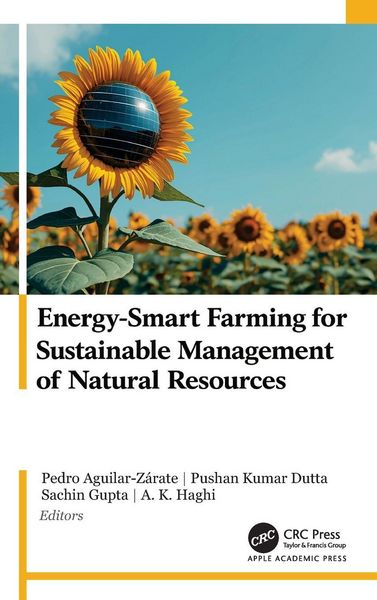
Produktbild: Energy-Smart Farming for Sustainable Management of Natural Resources
Vorbesteller Neu

Energy-Smart Farming for Sustainable Management of Natural Resources

216,99 €

inkl. gesetzl. MwSt., Versandkostenfrei


Beschreibung

In an era marked by climate change, resource depletion, and growing food demand, this volume offers a comprehensive examination of how smart farming practices can revolutionize agricultural sustainability. It presents a nuanced analysis of the technological, ecological, and economic dimensions of sustainable...

Beschreibung

In an era marked by climate change, resource depletion, and growing food demand, this volume offers a comprehensive examination of how smart farming practices can revolutionize agricultural sustainability. It presents a nuanced analysis of the technological, ecological, and economic dimensions of sustainable agriculture, providing a multifaceted understanding of the challenges and opportunities in this field.

Born from a deep-seated concern for the future of agriculture and a recognition of the transformative potential of emerging technologies, the volume covers the rapid advancements in artificial intelligence, blockchain, and precision agriculture and explores how these technologies can be harnessed to address critical issues in food production, resource management, and agricultural education. The chapters delve into the revolutionary potential of precision agriculture and sustainable intensive farming, providing with insight into how cutting-edge technologies are reshaping traditional farming practices and offering unprecedented levels of efficiency and sustainability. Chapters address agricultural open educational resources (OER), precision agriculture technologies, sustainable energy solutions for small-scale farmers, crop protection and food safety, pest management, plant disease detection, medicinal plant identification, natural resource management, agricultural water management, sustainable urban agriculture, environmental communication technology in farming, livestock management, business models of sustainable agriculture, and more.

By weaving together these diverse yet interconnected topics, Energy-Smart Farming for Sustainable Management of Natural Resources offers a comprehensive and nuanced understanding of the future of agriculture. It challenges readers to think critically about the integration of technology in farming, encouraging innovative approaches to longstanding agricultural and environmental challenges. Not merely a compilation of sustainable farming techniques, it is a roadmap for the future of agriculture, helping to provide the knowledge and analytical tools needed to navigate the complex interplay of technology, ecology, and economics in the ever-evolving world of sustainable farming.

Portrait

Pedro Aguilar-Zárate, PhD, is Professor at Tecnológico Nacional de México/ Instituto Tecnológico de Ciudad Valles, Mexico. He earned his PhD degree in Food Science and Technology at Autonomous University of Coahuila, Mexico. His research focuses on the development of bioprocesses for the extraction and purification of secondary plant metabolites, the development of microbial fermentations in solid and liquid media to produce metabolites of industrial interest, and the study of protein-polyphenols interactions. Dr. Aguilar has published over 50 articles in indexed journals, over 30 book chapters, and nine articles in refereed journals. He has directed and co-directed 33 undergraduate students, four MSc theses, and two PhD theses. He has made several presentations at scientific and academic events. He has been in charge of five research projects funded by the National Technological Institute of Mexico and collaborated on two projects funded by the sectoral funds SEP-CONACYT and CONAFOR-CONACYT. He is guest editor of Frontiers in Food Science and Technology, Polymers, Plant Science Today, Foods and the International Journal of Research and Technological Innovation (RIIT). This has earned him recognition as a member of the National System of Researchers level 2 (Mexico). His research and scientific career have been recognized by the Mexican Association of Food Science (2014), the Mexican Society of Biotechnology and Bioengineering (2015), the Mexican Association of Food Engineering and Biotechnology (2020), and the Potosino Council of Science and Technology (2021 and 2024).

Pushan Kumar Dutta, PhD, is a senior academic and researcher at Amity School of Engineering and Technology, Kolkata, India. He was an Erasmus Postdoctoral Fellow in Mechatronics at the University of Oradea, Romania, and earned a PhD in Electronics and Communication Engineering from Jadavpur University, specializing in AI, IoT, Industry 5.0, and sustainable engineering. He has authored and edited over 60 books with top publishers such as Springer and Elsevier and serves as the editor for the Sustainable Industrial Engineering Systems series by CRC Press. Recognized as a Mentor of Change by NITI Aayog, Dr. Dutta has guided multiple award-winning student projects and won the Johnson Control International White Paper Contest. With two patents, extensive publications, and expertise in Python and MATLAB, he combines innovation with sustainability, advancing fields such as energy-smart farming, quantum computing, and predictive analytics.

Sachin Gupta, PhD, is a distinguished academician and prolific researcher and serves as an Assistant Professor in the Department of Business Administration at Mohanlal Sukhadia University, Udaipur, India. Accredited with a DLitt in Management Sciences from Sambalpur University and a PhD from the University of Rajasthan, Dr. Gupta's academic pursuits extend to postgraduate specializations in business administration and finance. His research output includes 55 research papers, many gaining global acclaim, and 50 presentations at esteemed conferences. He has guided seven PhD scholars and one MPhil candidate, with five more pursuing doctoral studies under his mentorship. He has delivered over 100 guest lectures across India and internationally. Dr. Gupta's contributions include a MGNCRE-funded major research project and 15 patents, reflecting his dedication to innovation. His impactful work has garnered recognition from eminent organizations like MHRD and AICTE.

A. K. Haghi, PhD, is a retired professor with over 250 academic research-oriented books as well as over 1000 research papers published in various journals and conference proceedings with over 3700 citations and h-index of 31, according to the Google Scholar database. He is currently a senior material engineering consultant in the UK. Professor A. K. Haghi has received several grants, consulted for several major corporations, and is a frequent speaker to national and international audiences. He is Founder and former Editor-in-Chief of the International Journal of Chemoinformatics and Chemical Engineering and Polymers Research Journal. Professor Haghi has acted as an editorial board member of many international journals. He has served as a member of the Canadian Research and Development Center of Sciences & Cultures and the Research Chemistry Centre, Coimbra, Portugal. He has supervised several PhD and MSc thesis at University of Guilan (UG) and co-supervised international doctoral projects. Professor Haghi holds a BSc in urban and environmental engineering from the University of North Carolina (USA), and holds two MSc, one in mechanical engineering from North Carolina State University (USA) and another one in applied mechanics, acoustics, and materials from the Université de Technologie de Compiègne (France). He was awarded a PhD in engineering sciences at Université de Franche-Comté (France).
Produktdetails

Einband

Gebundene Ausgabe

Erscheinungsdatum

24.11.2026

Herausgeber A. K. Haghi + weitere
Verlag Apple Academic Press

Produktdetails

Einband

Gebundene Ausgabe

Erscheinungsdatum

24.11.2026

Herausgeber
Verlag Apple Academic Press
Seitenzahl

520

Maße (L/B)

22,9/15,2 cm

Sprache

Englisch

ISBN

978-1-77964-245-5

Herstelleradresse

Libri GmbH
Europaallee 1
36244 Bad Hersfeld
DE

Email: gpsr@libri.de

Noch keine Bewertungen vorhanden

Verfassen Sie die erste Bewertung zu diesem Artikel

Helfen Sie anderen Kundinnen und Kunden durch Ihre Meinung.

Kundinnen und Kunden meinen

Bewertungen (0)

  • Produktbild: Energy-Smart Farming for Sustainable Management of Natural Resources
  • Preface 1. Investigation into the Effectiveness of Open Educational Resources (OER) on Farming and Agricultural Professionals 2. Exploration of Precision Agriculture Technologies 3. Sustainable Energy Solutions for Small-Scale Farmers in Metaverse 4. Balancing Crop Protection and Food Safety: Mitigating the Impacts of Agricultural Pesticides 5. Transforming Pest Management: Innovations for Sustainable Solutions 6. Identification and Recognition of Maize Leaf Disease Based on a Seven Layer Deep Convolutional Neural Network (CNN) Model 7.Detecting Fruit Diseases using Data Sciences: Smart Agriculture 4.0 for South Asian Region 8. A Comparative Study on Deep Learning Classification Techniques for Plant Leaf Disease Detection: A Pathway to Agriculture 4.0 and Smart Cities 5.0 9. From Field to Medicine: Linking Traditional Knowledge with Machine Learning for Medicinal Plant Identification 10. Harvesting Sustainability: Energy-Smart Farming for Effective Natural Resource Management 11. Water Footprints of the Global Agriculture Sector 12. Development of Sky Farming: A Novel Approach to Sustainable Urban Agriculture Using Rotary Mechanisms 13. An Examination of Environmental Communication Through IoT (Internet of Things) Media Technologies: Opportunities, Challenges, and Future Prospects 14. Harnessing IoT and AI for Livestock Management Efficiency: Aligning Nature and Technology for Smart Agriculture 15. Cultivating Sustainability: Exploring the Business Models of Sustainable Agriculture 16. The Bidirectional Relationship Between Eco-Entrepreneurs' Motivation and Sustainable Innovation: The Case of the Tunisian Organic Farming Sector 17. Exploring the Social Perspectives, Quality, and Challenges of Greywater Generation, Disposal, and Re-Use Options Among Urban Smallholder Farmers and Eatery Businesses in Mbarara City 18. Promoting Sustainable Agriculture Practices: Reduction of Resource Using Blockchain-Enabled Distributed Framework 19. Adoption Model Using UTAUT2 (Unified Theory of Acceptance and Use of Technology 2) Constructs for the Adoption of ICT Devices for Agricultural Information Dissemination in Rubanda District, Mayuge District, and Mbarara City 20. A Smart, Wireless, and Energy-Efficient Color-Based Plant Health Monitoring System Using M5Stack's M5Stamp-Pico Index