KI-Beratung Beta

Produktbild: Transformational Protocols
Neu

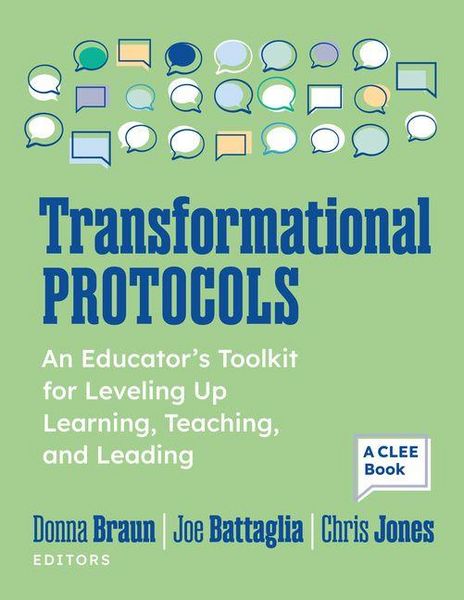
Transformational Protocols An Educator's Toolkit for Leveling Up Learning, Teaching, and Leading

146,99 €

inkl. gesetzl. MwSt., Versandkostenfrei


Beschreibung

How can schools use collaborative time to drive real improvement rather than surface-level conversation? Improvement in schools does not happen by accident; it occurs when educators unite with purpose, structure, and a shared commitment to high and equitable student outcomes. Transformational Protocols...

Beschreibung

How can schools use collaborative time to drive real improvement rather than surface-level conversation?
Improvement in schools does not happen by accident; it occurs when educators unite with purpose, structure, and a shared commitment to high and equitable student outcomes. Transformational Protocols provides a practical, field-tested road map for educators ready to move beyond surface-level conversation. Developed by the Center for Leadership and Educational Equity (CLEE), this resource draws on three decades of practice, research, and data-driven methodologies to turn routine meetings and professional development into transformative learning and results.
Organized around 4 interconnected phases—fostering learning communities, strengthening collaboration, improving instruction, and systematizing improvement—this book helps leaders at every level navigate the complexities of adult learning. Whether you are a teacher, instructional coach, principal, or district leader, you will find clear routines for building the psychological safety and trust necessary for honest reflection and shared problem solving. By centering real evidence of student learning and professional dilemmas, teams can shift from "initiative fatigue" to sustained, disciplined improvement that transforms both educator practices and student learning.
Book Features:

  • Over 75 ready-to-use protocols refined through decades of job-embedded professional learning.
  • A Facilitator’s Starter Kit with guidance for both virtual and in-person settings and tools for both new and experienced leaders.
  • A Systematic Improvement Arc that organizes tools into clear parts: building community, strengthening collaboration, improving instruction, and systematizing results.
  • Practical Classroom Adaptations and strategies for implementation across PLCs, leadership teams, and system-level work.
  • Equitable Routines designed to highlight multiple perspectives, engage differences, and maintain shared responsibility for each student's success.

Portrait

Joe Battaglia has been a teacher, coach, curriculum director, and a nonprofit and system leader in student-centered environments. He currently serves as a high school principal.
Donna Braun is cofounder of the Center for Leadership and Educational Equity (CLEE), a leadership development researcher, and a former school leader and science teacher in urban secondary public schools.
Chris Jones supports educators with tools for collaboration and brings experience in nonprofit communications and programs.

Produktdetails

Einband

Gebundene Ausgabe

Erscheinungsdatum

23.10.2026

Herausgeber Joe Battaglia + weitere
Verlag Teachers College Press

Produktdetails

Einband

Gebundene Ausgabe

Erscheinungsdatum

23.10.2026

Herausgeber
Verlag Teachers College Press
Seitenzahl

240

Maße (L/B)

27,9/21,6 cm

Sprache

Englisch

ISBN

978-0-8077-8495-2

Herstelleradresse

Libri GmbH
Europaallee 1
36244 Bad Hersfeld
DE

Email: gpsr@libri.de

Noch keine Bewertungen vorhanden

Verfassen Sie die erste Bewertung zu diesem Artikel

Helfen Sie anderen Kundinnen und Kunden durch Ihre Meinung.

Kundinnen und Kunden meinen

Bewertungen (0)

  • Produktbild: Transformational Protocols
  • Contents

    Introduction  1

    Facilitator’s Starter Kit: Documents to Support the Use of Protocols  7

     For Facilitators
    Why Protocols?  8
    What a Facilitator Does: Learning, Logistics, and Longevity  10
    Responsive Facilitation: Considerations  11
    Adapting or Creating Protocols: A Resource for Reflection  13
    Creative Tension: How Facilitators and Protocols Generate Energy for Improvement  16

     For Participants
    Facilitator, Presenter, and Participant: Developing an Understanding of Key Roles  18
    Pre-Conference Guide  19
    Pre-Conference Worksheet  21
    Focus/Framing Questions Exercise  22
    7 Student Work and Problem-Solving Protocols: A Use Guide for Problem-Solving  24
    Pocket Guide to Probing Questions  26
    Probing Questions Exercise  30

    PART 1: FOSTERING A LEARNING COMMUNITY

    1.  Open Receptivity to Learn Together  37
    Attributes of a Learning Community  38
    Change Activity  40
    Creating Learning Agreements: aka Forming Ground Rules or Creating Norms  42
    Feedback Principles  44
    Ladder of Inference: A Tool for Better Thinking Together  46
    Realms of Concern and Influence  51
    Zones of Learning: Movement Toward Transformational Learning  55

    2.  Building Understanding and Trust  60
    Compass Points: Diverse Strengths Support Strong Collaboration  61
    Connections  65
    Constructivist Listening Dyad  67
    Creating Metaphors  69
    Meet Me in the Middle  72
    Multiple Perspectives Protocol  74
    Paseo: Circles of Identity  76
    Passions Portrait Activity  80
    Say, Say, Do: A Resource for Reflection  84
    Student Portraits Activity  87
    What’s in a Name? For Community-Building  91

    PART 2: STRENGTHEN COLLABORATION AND PRACTICES

    3.  Building Shared Understanding Around Our Goals and Work  97
    Affinity Mapping  98
    Chalk Talk  100
    Constructivist Protocol: For Adult Work  102
    Microlabs: An Active Listening Protocol  104
    Success Analysis Protocol: For Individuals  107
    Wagon Wheels Brainstorm  110

    4.  Learning From Texts  112
    Block Party  113
    Final Word: A Text-Based Protocol  115
    Four A’s: A Text-Based Protocol  117
    Making Meaning Protocol  120
    Questions and Assumptions: A Text-Based Protocol  122
    Save the Last Word for ME: A Text-Based Protocol  124
    Text Rendering Experience: A Text-Based Protocol  126
    Three Levels of Text: A Text-Based Protocol  128

    5.  Learning From Professional Dilemmas  130
    Consultancy Protocol  131
    Critical Incidents  135
    Issaquah Protocol  138
    Peeling the Onion: Defining a Dilemma Protocol  142
    What? So What? Now What? Reflective Protocol  145

    PART 3: IMPROVE INSTRUCTION AND CURRICULUM IMPLEMENTATION

    6.  Examining Learning From Data  151
    ATLAS: Looking at Data  152
    Data Driven Dialogue  155
    Looking at Data Sets: A Collaborative Inquiry and Problem-Solving Protocol  162

    7.  Learning From Observing One Another  167
    First Classroom Visits  168
    Ghost Visit  170
    Observer as Learner  173
    Video Camera: A Peer Observation Activity  176

    8.  Investigating Teaching, Learning, and Assessment  178
    Charrette Protocol  179
    Examining Assessments  182
    Standards in Practice  185
    Tuning Protocol: Examining Adult Work  187

    9.  Focusing on Students  190
    About Learning From Student Work  191
    ATLAS: Learning From Student Work  192
    Collaborative Assessment Conference (CAC)  198
    Constructivist Protocol: Examining Student Work  203
    Instructional Core Analysis Protocol  206
    Preparing for Looking at Student Work: A Reflective Guide  210

    PART 4: SYSTEMATIZE IMPROVEMENTS IN SCHOOLS AND CLASSROOMS

    10.  Continuous Improvement Planning, Reorganizing Systems, and Routines  213
    Goal-Setting Protocol  214
    Future Protocol: AKA Back to the Future  216
    Five Whys for Inquiry  219
    Root Cause Analysis: Understanding Problems Before Designing Solutions  222
    PDSA: Plan-Do-Study-Act Tracker Template  224
    Empathy Interviews: Building on Student Perspective
  225

    References  229

    About the Editors  230