KI-Beratung Beta

Produktbild: Designing Qualitative Research to Do No Harm

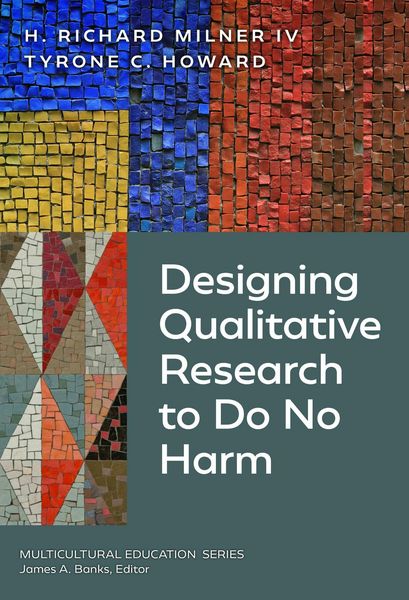
Designing Qualitative Research to Do No Harm

39,99 €

inkl. gesetzl. MwSt., Versandkostenfrei


Beschreibung

This book is for everyone who cares about how people, communities, and institutions are treated through research processes, and what we learn from research that impacts them. This accessible book helps researchers avoid unintentional harm to research participants, communities, institutions, and organizations....

Beschreibung

This book is for everyone who cares about how people, communities, and institutions are treated through research processes, and what we learn from research that impacts them.
This accessible book helps researchers avoid unintentional harm to research participants, communities, institutions, and organizations. The book assists researchers in building knowledge, attitudes, dispositions, skills, and practices to co-construct knowledge with people and communities to inform policies and practices. Grounded in research and theory, the book focuses on three essential qualitative research methods: interviewing, observation, and document analyses. Readers are invited to employ ethical, compassionate, and rigorous practices committed to harm prevention, particularly important in today's declining democracy.
The authors explore how to collect evidence, build and substantiate knowledge, and disseminate it in ways that honor, protect, and work in partnership with research participants and communities to improve human conditions. While early career and veteran researchers will find the book useful, so should parents, activists, policymakers, and anyone who cares about the health and well-being of people who participate in research and what we learn from it.
Book Features:

  • Introduces a set of four commitments to "Do No Harm in Research" for readers to adopt and adapt to their own context and content, including access to chapter-by-chapter discussion and reflection questions for courses, PLCs, and book clubs.
  • Written in an accessible tone and structure that is suitable for readers across different disciplines such as education, sociology, psychology, human development, health sciences, political science, ethnic studies, history, and social work.
  • Offers real-life scenarios to help readers think about how they would approach aspects of their work differently by applying Do No Harm commitments in their own research planning and practices.
  • Moves beyond philosophical debates and paradigm wars about the importance of qualitative research over other research traditions to focus on cultivating research practices and outcomes for equity and inclusion.

Produktdetails

Einband

Taschenbuch

Erscheinungsdatum

24.04.2026

Verlag Teachers College Press
Seitenzahl

144

Produktdetails

Einband

Taschenbuch

Erscheinungsdatum

24.04.2026

Verlag Teachers College Press
Seitenzahl

144

Maße (L/B/H)

22,8/15,6/0,9 cm

Gewicht

213 g

Sprache

Englisch

ISBN

978-0-8077-8766-3

Herstelleradresse

Libri GmbH
Europaallee 1
36244 Bad Hersfeld
DE

Email: gpsr@libri.de

Noch keine Bewertungen vorhanden

Verfassen Sie die erste Bewertung zu diesem Artikel

Helfen Sie anderen Kundinnen und Kunden durch Ihre Meinung.

Kundinnen und Kunden meinen

Bewertungen (0)

Weitere Artikel finden Sie in

  • Produktbild: Designing Qualitative Research to Do No Harm
  • Contents
    Series Foreword  xi
    Introduction: Commitments to Do No Harm in Qualitative Research  1
    Areas of Research to Address Harm  3
    Qualitative Research and Harm Prevention  6
    Harm in Research Processes  8
    Positionality: Who Are We? And Why Us and This Book?  10
    Do No Harm Research Commitments  14
    1.  Framing Phases of Do No Harm Research  21
    Credibility as Harm Prevention  21
    Preactive Phase of Research  23
    Interactive Phase of Research  27
    Postactive Phase of Research  30
    Summary and Conclusions  33
    2.  Do No Harm in Interviewing  34
    What Are Interviews and Why Do They Matter?  34
    Why Trust Matters in Interviewing  37
    Remembering Culture in Interviews  38
    Pláticas as a Form of Interviewing  43
    3.  Do No Harm in Observations  49
    Culture and Bias in Observation  50
    Seeing and Not Judging  52
    Structured Observation  54
    Field Experiments  57
    Participant Observation  59
    4.  Do No Harm in Document Analyses  63
    What Is Document Analysis and Why Does It Matter?  65
    Benefits of Document Analysis  68
    Selecting  70
    Meaning-Making  71
    Synthesizing Information  73
    5.  Applying Do No Harm in Research Commitments to Scenarios  78
    Case Study 1: Homework Policy and Outside of School Responsibility  79
    Case Study 2: Studying a Teacher’s Professional Development Reflections and Her Subsequent Practices  82
    Case Study 3: Dress Code Reminder, Corridor Interactions, and a Scarf Annalise Loves  83
    Case Study 4: Math Labeling, Tracking, and Special Education Referral  86
    Case Study 5: Assumptions About Demond, Basketball, and Family History  87
    Case Study 6: Evaluating Campus Climate  90
    Case Study 7: Community Organizations, People, and Advancing Vision  91
    Summary and Conclusions  93
    Conclusion: Making Do No Harm Commitments Normalized Practices  97
    Research as a Form of Punishment  98
    Moving Beyond Research as a Form of Punishment  99
    Positionality as Essential to Do No Harm  100
    Harm-Preventative Research From the Very Start  102
    Endnotes  107
    References  109
    Index  117
    About the Authors  123