KI-Beratung Beta

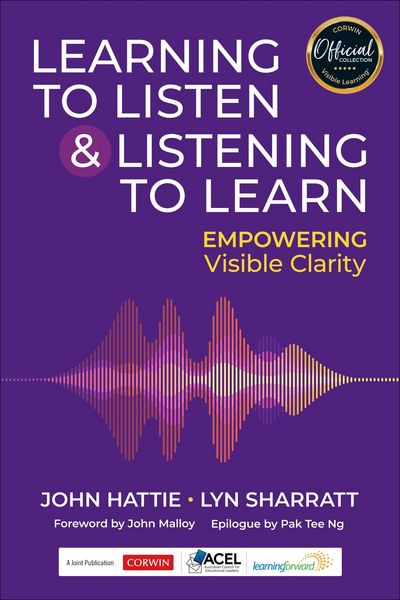
Produktbild: Learning to Listen and Listening to Learn

Learning to Listen and Listening to Learn Empowering Visible Clarity

39,99 €

inkl. gesetzl. MwSt., Versandkostenfrei


Beschreibung

Listening the most underrated skill in education

Listening the process of actively receiving, constructing meaning from, and responding to spoken or non-verbal messages is essential for teaching and learning. How can we check for understanding and ensure that students contributions are heard and understood...

Beschreibung

Listening the most underrated skill in education

Listening the process of actively receiving, constructing meaning from, and responding to spoken or non-verbal messages is essential for teaching and learning. How can we check for understanding and ensure that students contributions are heard and understood by peers and teachers?

In Learning to Listen and Listening to Learn, bestselling authors and internationally respected educators John Hattie and Lyn Sharratt demonstrate how listening can foster positive relationships, trust, and understanding while enhancing student learning. With a wealth of research to guide educators through the process of infusing active, sensitive, and empathetic listening skills into the classroom and school culture, this important guide includes:

  • The Visible CLARITY 5-Ear Listening Model
  • Reflection prompts and mantras to help reinforce key learnings from each chapter
  • Guidance on how to assess and enhance leaders', teachers', and students' listening skills

When we value every student's voice, we create an inclusive environment that encourages diverse perspectives, fosters equity, and develops accurate listening, empowering students to articulate their thoughts and enhancing skills they will use for their lifetimes.

Rezension

"I am thrilled that, finally, listening came into the focus of educators and researchers in education and teaching. Listening is probably the most underrated skill in educational settings. Although it is the most required skill per (school) day in many different ways, it is the skill to which the least amount of instruction time has traditionally been dedicated. I found it impressive, how the text explores the different aspects and purposes of listening and how a variety of concrete and practical instructional strategies and procedures are included to demonstrate how listening instruction can be put into the classroom practice. Listening is so much more than hearing as illustrated in the five-ear listening model. This is an extremely important work to bring listening into the classroom and to support teachers to develop and to teach listening skills! To combine the VL approach with issues of listening instruction is meaningful." Margarete Imhof Psychologie in den Bildungswissenschaften, Mainz, Germany

Produktdetails

Einband

Taschenbuch

Erscheinungsdatum

12.05.2025

Verlag SAGE Publications
Seitenzahl

192

Produktdetails

Einband

Taschenbuch

Erscheinungsdatum

12.05.2025

Verlag SAGE Publications
Seitenzahl

192

Maße (L/B/H)

22,3/14,8/1,1 cm

Gewicht

316 g

Sprache

Englisch

ISBN

978-1-07-197357-8

EU-Ansprechpartner

Kolibri 360 GmbH
Ettore-Bugatti-Straße 6-14
51149 Köln
DE
produktsicherheit@kolibri360.de

Herstelleradresse

SAGE Publications
1 Oliver's Yard 55 City Road
EC1Y 1SP London
GB
orders@sagepub.co.uk

Noch keine Bewertungen vorhanden

Verfassen Sie die erste Bewertung zu diesem Artikel

Helfen Sie anderen Kundinnen und Kunden durch Ihre Meinung.

Kundinnen und Kunden meinen

Bewertungen (0)

  • Produktbild: Learning to Listen and Listening to Learn
  • Foreword by John Malloy
    Chapter 1: Listening to Hear
    Chapter 2: The Five-Ear Listening Model
    Chapter 3: Listening Together
    Chapter 4: Listening Skills
    Chapter 5: Listening in the Classroom
    Chapter 6: Listening to Voices: Who is Doing the most Listening, Talking, Interpreting and Thinking?
    Chapter 7: Measuring Listening Skills
    Chapter 8: Listening Enhances the School Improvement Work - A Case Study
    Chapter 9: Concluding Thoughts
    Epilogue: Dr Pak Tee Ng
    References