KI-Beratung Beta

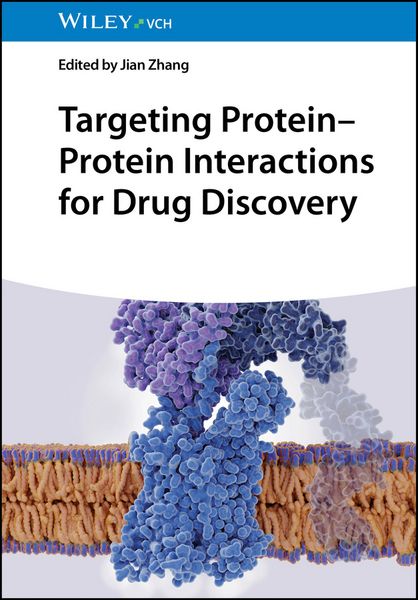
Produktbild: Targeting Protein-Protein Interactions for Drug Discovery

Targeting Protein-Protein Interactions for Drug Discovery

153,99 €

inkl. gesetzl. MwSt., Versandkostenfrei


Beschreibung

Up-to-date reference surveying the latest advances in the structural understanding of protein-protein interactions and developments in drug discovery and therapeutics   Targeting Protein?Protein Interactions for Drug Discovery provides a systematic and comprehensive overview of protein-protein interactions...

Beschreibung

Up-to-date reference surveying the latest advances in the structural understanding of protein-protein interactions and developments in drug discovery and therapeutics
 
Targeting Protein?Protein Interactions for Drug Discovery provides a systematic and comprehensive overview of protein-protein interactions (PPIs), reviewing foundational concepts, advanced methodologies, and emerging therapeutic strategies, reflecting the multidisciplinary nature of PPI research.
 
This book discusses computational methods for predicting PPI structures, with a special emphasis on protein docking and deep learning-based approaches, diverse chemical scaffolds for PPI modulation, including foldamers as inhibitors of aberrant PPIs and sulfonyl-¿-AApeptides as novel modulators, and the development and application of stapled peptides as modulators of intracellular PPIs, offering enhanced stability, binding affinity, and cellular permeability.
 
Readers will also find information on cyclic peptides, focusing on their unique conformational stabilization and therapeutic potential across a range of diseases, small molecule inhibitors targeting BCL-family proteins, revealing their potential in cancer therapy, molecular glues as activators for PPIs, categorized into degraders, stabilizers, and inhibitors based on their biological effects, and the targeting of the APC?Asef interaction for drug discovery in colorectal cancer therapy, offering a case study of specificity and clinical relevance.
 
Targeting Protein?Protein Interactions for Drug Discovery explores sample topics including:
 
* Challenges and strategies of drug discovery targeting PPIs, including high-throughput screening and structure-based drug design
* Fluorescence resonance energy transfer (FRET) technology, a powerful tool for real-time analysis of molecular interactions in live cells
* Utility of mass spectrometry (MS) for large-scale mapping of PPI networks with high sensitivity and resolution
* Proximity ligation assays (PLA) for detecting PPIs in situ, emphasizing spatial precision and adaptability for multiplexed detection
* Application of surface plasmon resonance (SPR) for characterizing PPI specificity, affinity, and kinetics
 
Exploring both classical and novel approaches to PPI characterization and modulation, Targeting Protein?Protein Interactions for Drug
Discovery offers a comprehensive reference for researchers aiming to unlock the therapeutic potential of PPIs along with educators and students engaged in the study of cellular mechanisms, drug discovery, and biotechnology.

Portrait

Jian Zhang received a BM degree in Pharmacology in 2002 from Peking University and a PhD in 2007 from Shanghai Institute of Materia Medica, Chinese Academy of Sciences. Then he moved to the University of Michigan to carry out postdoctoral research in Prof. Shaomeng Wang's group. In 2009, he joined Shanghai Jiao Tong University, School of Medicine, where he is a distinguished professor and doctoral supervisor. Currently, he is also the director of the Medicinal Bioinformatics Center. His fields of research include first-in-class drug design and chemical biology mainly pertaining to protein-protein interactions and allostery and their application in drug discovery.
Produktdetails

Einband

Gebundene Ausgabe

Erscheinungsdatum

12.11.2025

Abbildungen

35

Herausgeber Jian Zhang

Produktdetails

Einband

Gebundene Ausgabe

Erscheinungsdatum

12.11.2025

Abbildungen

35

Herausgeber Jian Zhang
Verlag Wiley-VCH
Seitenzahl

432

Maße (L/B/H)

24,5/17,8/3 cm

Gewicht

666 g

Auflage

1. Auflage

Sprache

Englisch

ISBN

978-3-527-35360-6

Herstelleradresse

Wiley-VCH GmbH
Boschstraße 12
69469 Weinheim
DE

Email: wiley-vch@kolibri360.de

Noch keine Bewertungen vorhanden

Verfassen Sie die erste Bewertung zu diesem Artikel

Helfen Sie anderen Kundinnen und Kunden durch Ihre Meinung.

Kundinnen und Kunden meinen

Bewertungen (0)

Die Leseprobe wird geladen.
  • Produktbild: Targeting Protein-Protein Interactions for Drug Discovery
  • Chapter 1: Exploring Protein-Protein Interactions: Concepts, Methods, and Implications

    1.1 General concepts of protein-protein interactions

    1.2 Functional significance of protein-protein interactions

    1.3 Methods for analyzing protein-protein interactions

    1.4 Implications of the basic research on protein-protein interactions

    1.5 Conclusions and perspectives


    Chapter 2: Overview of drug discovery targeting PPI systems

    2.1 Introduction

    2.2 Fundamentals of Protein-Protein Interactions

    2.3 Challenges in Targeting PPI Systems

    2.4 Approaches in Drug Discovery Targeting PPI Systems

    2.5 Case Studies and Success Stories

    2.6 Conclusion


    Chapter 3: Fluorescence Resonance Energy Transfer Technology and its Applications

    3.1 Introduction

    3.2 Mechanism of FRET

    3.3 Applications of FRET

    3.4 Advantages and Limitations

    3.5 Recent Advances

    3.6 Conclusion


    Chapter 4: Dissect Protein Interactions Using Mass Spectrometry

    4.1 Introduction

    4.2 Affinity purification coupled with mass spectrometry (AP-MS)

    4.3 Proximity labeling

    4.4 Cross-linking mass spectrometry (XL-MS)

    4.5 Co-fractionation coupled with mass spectrometry (CF-MS)

    4.6 Thermal proximity coaggregation (TPCA)

    4.7 Limited proteolysis?mass spectrometry (LiP?MS)

    4.8 Conclusion and outlook


    Chapter 5: Detection of protein-protein interactions in situ via proximity ligation assay

    5.1 Introduction

    5.2 Implementations of proximity ligation assay

    5.3 Applications of PLA for detecting protein-protein interactions

    5.4 Conclusions and outlooks


    Chapter 6: The Application of Surface Plasmon Resonance in the Characterization of Protein-Protein Interactions

    6.1 Introduction

    6.2. Applications of SPR assay in PPI Characterization

    6.3. Advantages and Limitations of SPR Application for PPIs

    6.4. Future Directions


    Chapter 7: Computational methods for protein-protein interactions

    7.1. Introduction

    7.2. Protein-protein docking

    7.3. End-to-end structure prediction

    7.4. CAPRI experiments

    7.5. Challenges and Future directions


    Chapter 8: Foldamers as Inhibitors of Aberrant Protein-Protein Interactions

    8.1 Introduction

    8.2 The Evolution of Hamilton?s Oligopyridylamides

    8.3 Limitations of a Tedious Synthetic Route

    8.4 OPs as Antagonists of Neurodegeneration

    8.5 OPs Inhibit HIV Infection

    8.6 OPs Targeting Type II Diabetes

    8.7 OPs Targeting and Reactivating Mutant Protein in Cancer

    8.8 Novel Synthesis of OPs and Alzheimer?s Disease

    8.9 2D-FAST

    8.10 OQ Foldamers - Structure and Discovery

    8.11 Synthesis of OQ Foldamers

    8.12 OQs as Modulators of Type II Diabetes-Related aPPIs

    8.13 Mechanistic Insights to OQ Manipulation of aPPIs

    8.14 Chemical Diversity and Structure Modulate Efficacy of Oqs

    8.15 Modulation of Alzheimer?s Disease-Related Aß

    8.16 OQs for the Modulation of Synucleinopathies

    8.17 Epilogue


    Chapter 9: Application of Sulfonyl-¿-AApeptides for PPI Drug Discovery

    9.1 Introduction to the Structure of Sulfonyl-¿-AA-peptides

    9.2 The Applications of Sulfonyl-¿-AA-peptides

    9.3 Future Directions/Conclusions


    Chapter 10: Introduction of the Application of Stapled Peptides in Protein-Protein Interactions Drug Discovery and their Successful Examples

    10.1. Introduction

    10.2. Stapled Peptides: Structure Features and Benefits

    10.3. Successful Applications of Stapled Peptides in Drug Discovery

    10.4. Challenges and Limitations

    10.5. Future Directions


    Chapter 11: Cyclic peptides for PPI drug discovery

    11.1. a-helix cyclic peptides (stapled peptides)

    11.2. ß-hairpin cyclic peptides

    11.3. Macrocyclic peptides

    11.4. Summary and outlook


    Chapter 12: Small molecule inhibitors targeting protein-protein interactions in the BCL protein

    12.1 Introduction

    12.2 Inhibitors of BCL-2 family antiapoptotic proteins

    12.3 Inhibitors of ß-catenin/BCL9

    12.4 Targeting BCL-6 small molecule inhibitors

    12.5. BCL-3 inhibitors

    12.6. BCL-10 inhibitors

    12.7. Summary


    Chapter 13: Molecular Glues as Activators for PPI

    13.1 Introduction

    13.2 Molecular Glues as orthosteric PPI stabilizers/activators

    13.3 Methods for Molecular Glue Discovery

    13.4 Conclusions and Outlook


    Chapter 14: Targeting APC?Asef Protein-Protein Interaction for Drug Discovery in Colorectal Cancer Therapy

    14.1. Introduction

    14.2. Structural insights into APC?Asef interaction

    14.3. Current APC?Asef inhibitor

    14.4. A More Sensitive FP Method for Identifying Highly Active APC?Asef Inhibitors

    14.5. Conclusions and Outlook


    Chapter 15: Computational methods applied to drug discovery of protein-protein interaction systems

    15.1 Introduction

    15.2 Computational methods for PPI prediction

    15.3 Conclusions and outlook