KI-Beratung Beta

Produktbild: Microbial Inoculants
- 13%

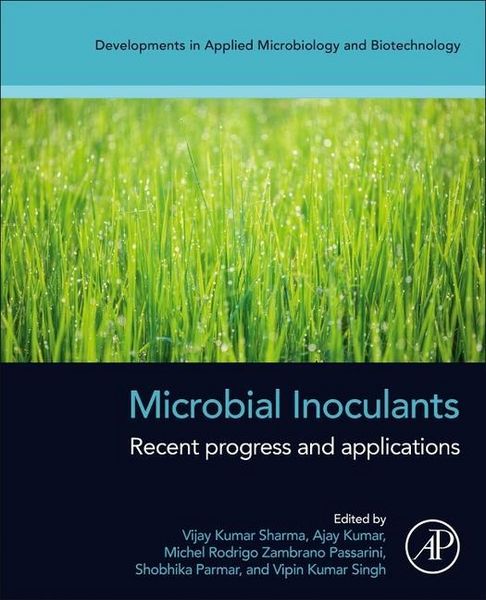
Microbial Inoculants Recent Progress and Applications

13% sparen

137,99 € UVP 159,40 €

inkl. gesetzl. MwSt., Versandkostenfrei


Beschreibung

In the recent past, beneficial microorganisms have been sustainably used in agriculture as a safe, economic, and effective alternative to chemical fertilizers or pesticides. These beneficial microbes, including bacteria, actinomycetes, and yeast, were efficiently applied in soil, seeds, fruits, or plants...

Beschreibung

In the recent past, beneficial microorganisms have been sustainably used in agriculture as a safe, economic, and effective alternative to chemical fertilizers or pesticides. These beneficial microbes, including bacteria, actinomycetes, and yeast, were efficiently applied in soil, seeds, fruits, or plants as inoculants, to achieve the optimum agricultural yield.
An efficient delivery method or enhanced shelf life of microbial inoculants in the soil or seed is still a matter of concern. The response of local genetic or ecological factors, after microbial applications, are also unknown and less studied. Therefore, Microbial Inoculants: Recent Progress and Applications fulfills the need to explore and learn about an efficient delivery mechanism, selection of microbial strain as inoculants, and related technological advances, for the efficient and productive use of microbial inoculants. Moreover, factors like methods of formulation, interaction between host plant and microbe, impact of inoculation on the metabolomics of plants, the effect of microbial inoculants on soil dynamics, proteomics approach of plant-microbe interaction, as well as the registration and regulation process of bio inoculants for commercial production are described in 16 chapters by the leading academicians and researchers from different parts of the world.

Produktdetails

Einband

Taschenbuch

Erscheinungsdatum

26.05.2023

Abbildungen

30 illustrations (10 in full color)

Herausgeber Vijay Kumar Sharma + weitere

Produktdetails

Einband

Taschenbuch

Erscheinungsdatum

26.05.2023

Abbildungen

30 illustrations (10 in full color)

Herausgeber
Verlag Elsevier Science & Technology
Seitenzahl

384

Maße (L/B/H)

15,1/22,9/2,1 cm

Gewicht

618 g

Sprache

Englisch

ISBN

978-0-323-99043-1

Noch keine Bewertungen vorhanden

Verfassen Sie die erste Bewertung zu diesem Artikel

Helfen Sie anderen Kundinnen und Kunden durch Ihre Meinung.

Kundinnen und Kunden meinen

Bewertungen (0)

Die Leseprobe wird geladen.
  • Produktbild: Microbial Inoculants
  • 1. Microbial inoculants: Recent progress in formulations and methods of application
    2. Application of microbial inoculants as an alternative to chemical products for decomposition of organic wastes
    3. Microbial inoculants and their potential application in salinity management
    4. Metal-tolerant microbial inoculants for improved phytoextraction
    5. Seed priming with microbial inoculants for enhanced crop yield
    6. Organic waste decomposition by microbial inoculants as an effective tool for environmental management
    7. Microbial inoculants for the management of herbicide toxicity in plants
    8. Immobilization of microbial inoculants for improving soil nutrient bioavailability
    9. Plant growth-promoting microbes and nanoparticles: Biotechnological potential in agrobiological systems
    10. Potential of microbial inoculants for the management of agricultural soils contaminated by recalcitrant compounds
    11. Tropical biomes as microbial sources for efficient biocatalysts to environmental purposes
    12. Role of microbial biofilms in bioremediation: Current perspectives
    13. Role of microbial enzymes in bioremediation: Emerging opportunities and limitations
    14. Applications of microbial formulations in the pharmaceutical industry
    15. An evaluation of the lacunae in current techniques using microbial inoculants for enhanced bioremediation and nutrient recovery
    16. Exploring the potential of fungal endophytes: A quintessential source for novel secondary metabolites and beneficial aspects