KI-Beratung Beta

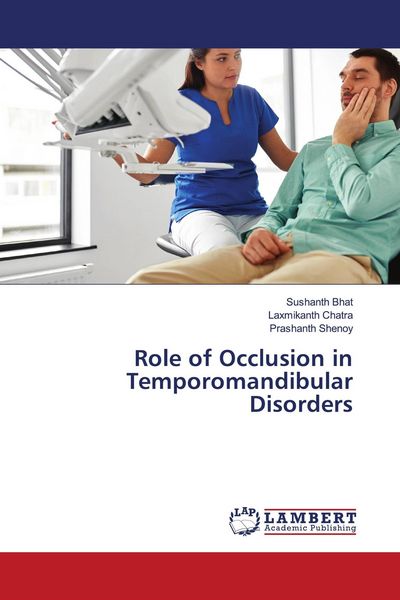
Produktbild: Role of Occlusion in Temporomandibular Disorders

Role of Occlusion in Temporomandibular Disorders

48,99 €

inkl. gesetzl. MwSt., Versandkostenfrei


Beschreibung

Temperomandibular disorders are a term used to describe a number of painful and non-painful disorders affecting the muscles of mastication, the temporomandibular joint, and the contiguous structures.The etiology of TMJ pain has been a subject of debate. Modern etiologic theories for the development of...

Beschreibung

Temperomandibular disorders are a term used to describe a number of painful and non-painful disorders affecting the muscles of mastication, the temporomandibular joint, and the contiguous structures.The etiology of TMJ pain has been a subject of debate. Modern etiologic theories for the development of TMD contain different external and internal factors. There is a great controversy related to the role of occlusion in the etiology of TMD. Occlusion has an important place within the multi-factorial concept of temporomandibular disorder (TMD) etiopathogenesis as well as in every form of dental treatment. Controlled clinical study results are difficult to understand unless occlusion is taken as an etiologic factor of TMD. Also, a lot of studies have failed on proving that occlusion has nothing to do with TMD.So it is necessary to understand the occlusion in temporomandibular disorders and also helpful for treating them

Produktdetails

Einband

Taschenbuch

Erscheinungsdatum

05.04.2021

Verlag LAP LAMBERT Academic Publishing
Seitenzahl

104

Produktdetails

Einband

Taschenbuch

Erscheinungsdatum

05.04.2021

Verlag LAP LAMBERT Academic Publishing
Seitenzahl

104

Maße (L/B/H)

22/15/0,7 cm

Gewicht

173 g

Sprache

Englisch

ISBN

978-620-3-58927-6

Herstelleradresse


Email: info@bod.de

Noch keine Bewertungen vorhanden

Verfassen Sie die erste Bewertung zu diesem Artikel

Helfen Sie anderen Kundinnen und Kunden durch Ihre Meinung.

Kundinnen und Kunden meinen

Bewertungen (0)

  • Produktbild: Role of Occlusion in Temporomandibular Disorders