KI-Beratung Beta

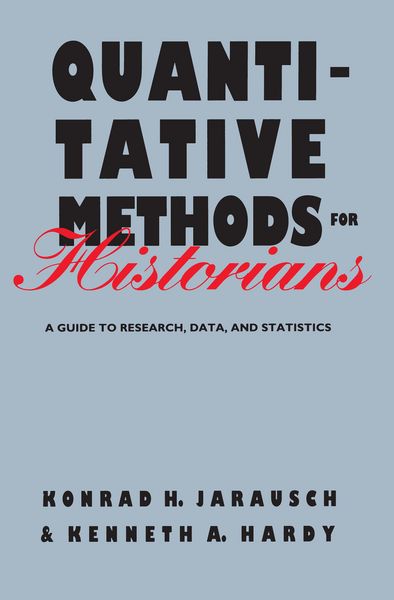
Produktbild: Quantitative Methods for Historians

Quantitative Methods for Historians A Guide to Research, Data, and Statistics

31,90 €

inkl. gesetzl. MwSt.

Beschreibung

The pioneering texts in quantitative history were written over two decades ago, but as a command of methodological context, computer experience, and statistical literacy have become increasingly important to the study of history, the need for an introductory text addressing these matters has increased....

Beschreibung

The pioneering texts in quantitative history were written over two decades ago, but as a command of methodological context, computer experience, and statistical literacy have become increasingly important to the study of history, the need for an introductory text addressing these matters has increased. Quantitative Methods for Historians is a theoretical and practical guide for the application of quantitative analysis in historical research. It is designed for students of history and related disciplines who are curious about the possibilities of quantification and want to learn more about its recent development.
Integrating the use of the statistical packages SAS and SPSS with the quantitative method, the authors discuss techniques for defining a problem, proceed to the building of a data set and the use of statistical methods, and conclude with the interpretation of results. The data set section concentrates on the basics of formalized research, discussing the coding process and the more complicated problems of data transformation and linkage. The statistical parts systematically build upon traditional fundamentals and introduce new analytical techniques for qualitative variables.
Intended as a working introduction to quantitative methods, this guide also provides additional information on advanced statistical techniques and discusses questions of historical computing, reflecting critically on the proper role of quantitative methods.

Produktdetails

Format

ePUB

Kopierschutz

Nein

Family Sharing

Nein

Text-to-Speech

Ja

Produktdetails

Format

ePUB

Format

eBooks im ePUB-Format erlauben eine dynamische Anpassung des Inhalts an die jeweilige Display-Größe des Lesegeräts. Das Format eignet sich daher besonders für das Lesen auf mobilen Geräten, wie z.B. Ihrem tolino, Tablets oder Smartphones.

Kopierschutz

Nein

Kopierschutz

Dieses eBook können Sie uneingeschränkt auf allen Geräten der tolino Familie, allen sonstigen eReadern und am PC lesen. Das eBook ist nicht kopiergeschützt und kann ein personalisiertes Wasserzeichen enthalten. Weitere Hinweise zum Lesen von eBooks mit einem personalisierten Wasserzeichen finden Sie unter Hilfe/Downloads.

Family Sharing

Nein

Family Sharing

Mit Family Sharing können Sie eBooks innerhalb Ihrer Familie (max. sechs Mitglieder im gleichen Haushalt) teilen. Sie entscheiden selbst, welches Buch Sie mit welchem Familienmitglied teilen möchten. Auch das parallele Lesen durch verschiedene Familienmitglieder ist durch Family Sharing möglich. Um eBooks zu teilen oder geteilt zu bekommen, muss jedes Familienmitglied ein Konto bei Thalia oder einem anderen tolino-Buchhändler haben. Weitere Informationen finden Sie unter Hilfe/Family-Sharing.

Text-to-Speech

Ja

Text-to-Speech

Bedeutet Ihnen Stimme mehr als Text? Mit der Funktion Text-to-Speech können Sie sich im tolino webReader und in der aktuellen Thalia – Lesen & Hören App das eBook vorlesen lassen. Weitere Informationen finden Sie unter Hilfe/Text-to-Speech.

Erscheinungsdatum

01.08.2016

Verlag The University of North Carolina Press
Seitenzahl

266 (Printausgabe)

Dateigröße

4866 KB

Sprache

Englisch

EAN

9781469621470

Barrierefreiheit
  • navigierbares Inhaltsverzeichnis
  • alle Texte können angepasst werden
  • logische Lesereihenfolge eingehalten

Noch keine Bewertungen vorhanden

Verfassen Sie die erste Bewertung zu diesem Artikel

Helfen Sie anderen Kundinnen und Kunden durch Ihre Meinung.

Kundinnen und Kunden meinen

Bewertungen (0)

Weitere Artikel finden Sie in

Die Leseprobe wird geladen.
  • Produktbild: Quantitative Methods for Historians