KI-Beratung Beta

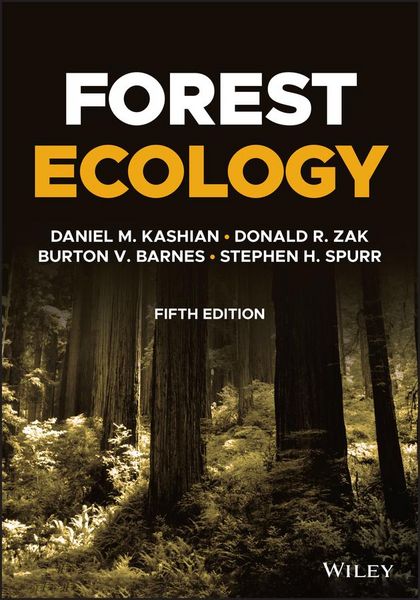
Produktbild: Forest Ecology, 5th Edition

Forest Ecology, 5th Edition

156,99 €

inkl. gesetzl. MwSt., Versandkostenfrei


Beschreibung

FOREST ECOLOGY   Authoritative resource covering traditional plant ecology topics and contemporary components such as climate change, invasive species, ecosystem services, and more   Forest Ecology provides comprehensive coverage of the field, focusing on traditional plant ecology topics of tree structure...

Beschreibung

FOREST ECOLOGY
 
Authoritative resource covering traditional plant ecology topics and contemporary components such as climate change, invasive species, ecosystem services, and more
 
Forest Ecology provides comprehensive coverage of the field, focusing on traditional plant ecology topics of tree structure and growth, regeneration, effects of light and temperature on tree physiology, forest communities, succession, and diversity. The work also reviews abiotic factors of light, temperature, physiography (landforms and topography), soil, and disturbance (especially fire), and provides coverage of ecosystem-level topics including carbon storage and balance, nutrient cycling, and forest ecosystem productivity.
 
The 5th edition of Forest Ecology retains the readability and accessibility of the previous editions and includes important additional topical material that has surfaced in the field. All topics are approached with a landscape ecosystem or geo-ecological view, which places biota (organisms and communities) in context as integral parts of whole ecosystems that also include air (atmosphere and climate), topography, soil, and water. As such, the book fills a niche utilized by no other forest ecology text on the market, helping students and researchers consider whole ecosystems at multiple scales.
 
Sample topics covered in Forest Ecology include:
* Contemporary components of forest ecology, including climate change, invasive species, diversity, ecological forestry, landscape ecology, and ecosystem services.
* Characteristics of physiography important for forest ecosystems, including its effects on microclimate, disturbance, soil, and vegetation.
* Genetic diversity of woody plants and genecological differentiation of tree species, including the importance of hybridization, polyploidy, and epigenetics.
* Site quality estimation using tree height and ground flora, and multiple-factor approaches to forest site and ecosystem classification and mapping.
 
Forest Ecology is a highly accessible text for students, but it also serves as an excellent reference for academics. In addition, practitioners of forest ecology can also harness the information within to gain better insight into the field for practical application of concepts.

Produktdetails

Einband

Taschenbuch

Erscheinungsdatum

21.02.2023

Verlag John Wiley & Sons Inc
Seitenzahl

784

Produktdetails

Einband

Taschenbuch

Erscheinungsdatum

21.02.2023

Verlag John Wiley & Sons Inc
Seitenzahl

784

Maße (L/B/H)

25,5/17,7/3,9 cm

Gewicht

1606 g

Auflage

5 ed

Sprache

Englisch

ISBN

978-1-119-47608-5

Herstelleradresse

Libri GmbH
Europaallee 1
36244 Bad Hersfeld
DE

Email: gpsr@libri.de

Noch keine Bewertungen vorhanden

Verfassen Sie die erste Bewertung zu diesem Artikel

Helfen Sie anderen Kundinnen und Kunden durch Ihre Meinung.

Kundinnen und Kunden meinen

Bewertungen (0)

Die Leseprobe wird geladen.
  • Produktbild: Forest Ecology, 5th Edition
  • Acknowledgments vii

    Introduction ix

    1 An Introduction to Drawing for Interior Design 1

    Understanding Orthographic Projection Drawings 5

    Orthographic Projection Drawings for Interior Environments 7

    Floor Plans 7

    Interior Elevations 9

    Sections 16

    Reflected Ceiling Plans 18

    Dimensions 19

    Lettering 21

    More about Orthographic Projections 22

    2 The Design Process and Related Graphics 29

    Programming 32

    Diagrams and Programming Analysis Graphics 34

    Programming Matrices 40

    Schematic Design 43

    Bubble Diagrams 43

    Blocking Diagrams 43

    Fit and Stacking Plans 47

    Conceptual Design 47

    Mood and Inspiration Boards 49

    Schematic Presentation Graphics 51

    Design Development 60

    3 Paraline and Perspective Drawings 63

    Paraline Drawings 64

    Plan Oblique Drawings 65

    Isometric Drawings 67

    Perspective Drawings 68

    Perspective Basics 68

    One-Point Perspective 73

    Two-Point Perspective 73

    Three-Point Perspective 74

    Developing Visual Skills 74

    Ellipses 74

    Use of Enclosing Boxes 74

    4 Drawing and Sketching Interior Environments 81

    Estimated One-Point Interior Perspective Drawings 81

    Estimated Two-Point Interior Perspective Drawings 87

    Prepared Perspective Grid Charts 92

    Two-Point Plan Projection Method 94

    Using Photographs 97

    Drawing Composition and Cropping 99

    5 Rendering by Hand 103

    Rendering as Illumination 104

    Materials, Media, and Tools 105

    Rendering Media 106

    Rendering Orthographic Projection Drawings 107

    Rendering Simplified Shadows 108

    Materials and Finishes 109

    Color Rendering 111

    Additional Tips for Manual Rendering 125

    Rendering Perspective Drawings 126

    Shadows in Perspective Renderings 126

    Rendering Perspective Drawings without Color 126

    Rendering Interior Perspectives in Color 132

    Techniques and Tips for Perspective Rendering 135

    Hybrid Rendering: Combining Hand and Digital Rendering 139

    6 SketchUp and Digital Modeling 143

    Getting Started in SketchUp 144

    SketchUp Drawing Basics 147

    Drawing First Steps 147

    Navigation Basics 149

    Selection 149

    More Drawing Basics 152

    Creating Plan and Section Views 168

    Exporting Files 169

    Importing Files 170

    Working from Imported CAD Files 171

    Working with REVIT and Other File Types 173

    Rendering and Materials Selection in SketchUp 173

    7 Digital Rendering 175

    Rendering in SketchUp 176

    SketchUp Extensions 181

    Rendering with Photoshop 184

    Getting Started with CAD- or Revit-Generated Drawings 184

    Rendering Setup 186

    Rendering Techniques and Options 189

    Rendering Perspectives in Photoshop 197

    Revit Rendering 206

    8 Scale Models: Physical and Digital 209

    Materials and Tools 210

    Paperboard 211

    Wood 215

    Plastics and Foam 217

    Additional Tools 217

    Construction and Use of Models 219

    Physical Scale Models in Professional Practice 224

    Digital Fabrication and 3D Printing 228

    Virtual Reality 234

    9 Presenting Materials and Finishes 239

    Materials and Media Used in Making Boards and Physical Presentations 243

    Organization and Composition 250

    Sample Presentation Board Organizational Approaches 250

    Titles, Keys, and Legends 252

    Tips for Materials Preparation 255

    Digital Presentation 259

    10 Making the Complete Presentation 263

    Process and Presentation 267

    Organization and Composition 268

    Physical Presentations 268

    Digital Presentation 273

    Beyond the Board and Sheet 284

    Graphic Design Components 287

    Grids 287

    Type 288

    Creating Hierarchy 291

    Public Speaking and Design Communication 293

    Verbal Presentation Basics 296

    A Few Words from the Experts 298

    Appendix: Color Theory for Rendering 303

    Index 305