KI-Beratung Beta

Gutscheinbedingungen

**Gültig bis 09.11.2026 auf tolino shine color (4016621130473), tolino vision color (4016621130183) und tolino vision color weiß (4016621131456) online auf thaalia.live, in der Thalia App und in allen Thalia Buchhandlungen in Österreich. In den Buchhandlungen nur gültig auf lagernde Ware. Pro Einkauf einmal einlösbar. Nur gültig gegen Vorlage oder im Onlineshop hinterlegter Bonuscard. Infos zur Einlösung in der Buchhandlung sind auf der Bonuscard-Vorteilspreisseite zu finden. Click & Collect nur bei Onlinevorabzahlung möglich. Keine Einlösung bei Scan & Go-Bezahlung. Keine Barauszahlung. Nicht kombinierbar mit anderen Aktionen und Gutscheinen. Nicht gültig für Geschenkkarten, Versandkosten und Services. Nur solange der Vorrat reicht.

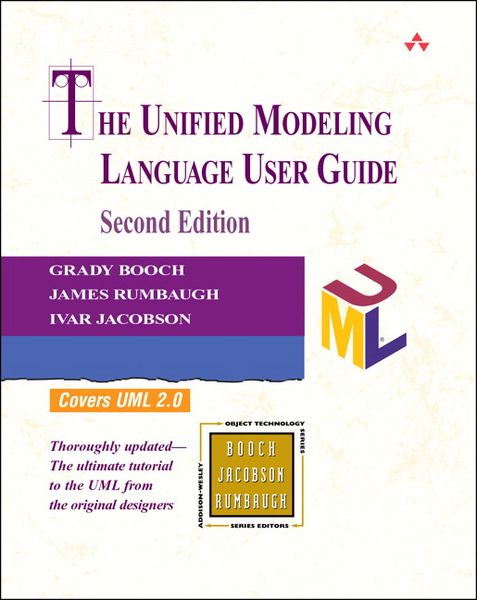
Produktbild: Unified Modeling Language User Guide, The
- 10%

Unified Modeling Language User Guide, The

10% sparen

56,99 € UVP 63,99 €

inkl. gesetzl. MwSt., Versandkostenfrei


Beschreibung

Produktdetails

Einband

Taschenbuch

Erscheinungsdatum

28.09.2024

Verlag

Pearson Education Limited

Seitenzahl

504

Maße (L/B/H)

22,9/18,7/2,7 cm

Gewicht

803 g

Auflage

2

Sprache

Englisch

ISBN

978-0-13-485215-7

Beschreibung

Produktdetails

Einband

Taschenbuch

Erscheinungsdatum

28.09.2024

Verlag

Pearson Education Limited

Seitenzahl

504

Maße (L/B/H)

22,9/18,7/2,7 cm

Gewicht

803 g

Auflage

2

Sprache

Englisch

ISBN

978-0-13-485215-7

Herstelleradresse

Financial Times Prent.
St.-Martin-Straße 82
81541 München
DE

Email: salesde@pearson.com

Noch keine Bewertungen vorhanden

Verfassen Sie die erste Bewertung zu diesem Artikel

Helfen Sie anderen Kundinnen und Kunden durch Ihre Meinung.

Kundinnen und Kunden meinen

Bewertungen (0)

  • Produktbild: Unified Modeling Language User Guide, The
  • Preface xiiiPart 1: Getting Started 1Chapter 1: Why We Model 3

    The Importance of Modeling 4

    Principles of Modeling 8

    Object-Oriented Modeling 10

    Chapter 2: Introducing the UML 13

    An Overview of the UML 14

    A Conceptual Model of the UML 17

    Architecture 31

    Software Development Life Cycle 33

    Chapter 3: Hello, World! 37

    Key Abstractions 38

    Mechanisms 41

    Artifacts 43

    Part 2: Basic Structural Modeling 45Chapter 4: Classes 47

    Getting Started 47

    Terms and Concepts 49

    Common Modeling Techniques 54

    Hints and Tips 59

    Chapter 5: Relationships 61

    Getting Started 62

    Terms and Concepts 63

    Common Modeling Techniques 69

    Hints and Tips 74

    Chapter 6: Common Mechanisms 75

    Getting Started 76

    Terms and Concepts 77

    Common Modeling Techniques 84

    Hints and Tips 88

    Chapter 7: Diagrams 89

    Getting Started 90

    Terms and Concepts 91

    Common Modeling Techniques 96

    Hints and Tips 101

    Chapter 8: Class Diagrams 103

    Getting Started 103

    Terms and Concepts 105

    Common Modeling Techniques 106

    Hints and Tips 113

    Part 3: Advanced Structural Modeling 115Chapter 9: Advanced Classes 117

    Getting Started 117

    Terms and Concepts 118

    Common Modeling Techniques 130

    Hints and Tips 131

    Chapter 10: Advanced Relationships 133

    Getting Started 134

    Terms and Concepts 135

    Common Modeling Techniques 148

    Hints and Tips 149

    Chapter 11: Interfaces, Types, and Roles 151

    Getting Started 151

    Terms and Concepts 153

    Common Modeling Techniques 157

    Hints and Tips 161

    Chapter 12: Packages 163

    Getting Started 164

    Terms and Concepts 165

    Common Modeling Techniques 170

    Hints and Tips 174

    Chapter 13: Instances 175

    Getting Started 175

    Terms and Concepts 176

    Common Modeling Techniques 182

    Hints and Tips 183

    Chapter 14: Object Diagrams 185

    Getting Started 185

    Terms and Concepts 187

    Common Modeling Techniques 188

    Hints and Tips 191

    Chapter 15: Components 193

    Getting Started 193

    Terms and Concepts 194

    Common Modeling Techniques 203

    Hints and Tips 205

    Part 4: Basic Behavioral Modeling 207Chapter 16: Interactions 209

    Getting Started 210

    Terms and Concepts 211

    Common Modeling Techniques 221

    Hints and Tips 222

    Chapter 17: Use Cases 225

    Getting Started 225

    Terms and Concepts 228

    Common Modeling Techniques 236

    Hints and Tips 237

    Chapter 18: Use Case Diagrams 239

    Getting Started 239

    Terms and Concepts 241

    Common Modeling Techniques 242

    Hints and Tips 248

    Chapter 19: Interaction Diagrams 249

    Getting Started 250

    Terms and Concepts 251

    Common Modeling Techniques 260

    Hints and Tips 264

    Chapter 20: Activity Diagrams 267

    Getting Started 268

    Terms and Concepts 269

    Common Modeling Techniques 280

    Hints and Tips 284

    Part 5: Advanced Behavioral Modeling 285Chapter 21: Events and Signals 287

    Getting Started 287

    Terms and Concepts 288

    Common Modeling Techniques 293

    Hints and Tips 296

    Chapter 22: State Machines 297

    Getting Started 298

    Terms and Concepts 300

    Common Modeling Techniques 315

    Hints and Tips 318

    Chapter 23: Processes and Threads 319

    Getting Started 320

    Terms and Concepts 321

    Common Modeling Techniques 326

    Hints and Tips 330

    Chapter 24: Time and Space 331

    Getting Started 331

    Terms and Concepts 332

    Common Modeling Techniques 335

    Hints and Tips 338

    Chapter 25: State Diagrams 339

    Getting Started 340

    Terms and Concepts 341

    Common Modeling Techniques 343

    Hints and Tips 347

    Part 6: Architectural Modeling 349Chapter 26: Artifacts 351

    Getting Started 351

    Terms and Concepts 352

    Common Modeling Techniques 355

    Hints and Tips 360

    Chapter 27: Deployment 361

    Getting Started 361

    Terms and Concepts 362

    Common Modeling Techniques 366

    Hints and Tips 368

    Chapter 28: Collaborations 369

    Getting Started 369

    Terms and Concepts 371

    Common Modeling Techniques 376

    Hints and Tips 382

    Chapter 29: Patterns and Frameworks 383

    Getting Started 383

    Terms and Concepts 385

    Common Modeling Techniques 389

    Hints and Tips 394

    Chapter 30: Artifact Diagrams 395

    Getting Started 395

    Terms and Concepts 396

    Common Modeling Techniques 398

    Hints and Tips 407

    Chapter 31: Deployment Diagrams 409

    Getting Started 409

    Terms and Concepts 411

    Common Modeling Techniques 413

    Hints and Tips 419

    Chapter 32: Systems and Models 421

    Getting Started 421

    Terms and Concepts 423

    Common Modeling Techniques 426

    Hints and Tips 428

    Part 7: Wrapping Up 431Chapter 33: Applying the UML 433

    Transitioning to the UML 433

    Where to Go Next 435

    Appendix A: UML Notation 437Appendix B: Rational Unified Process 443Glossary 451Index 463