KI-Beratung Beta

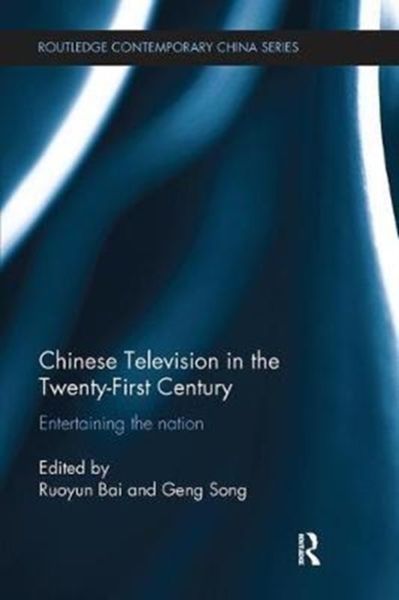
Produktbild: Chinese Television in the Twenty-First Century

Chinese Television in the Twenty-First Century

74,99 €

inkl. gesetzl. MwSt., Versandkostenfrei


Beschreibung

The past two decades witnessed the rise of television entertainment in China. Although television networks are still state-owned and Party-controlled in China, the ideological landscape of television programs has become increasingly diverse and even paradoxical, simultaneously subservient and defiant,...

Beschreibung

The past two decades witnessed the rise of television entertainment in China. Although television networks are still state-owned and Party-controlled in China, the ideological landscape of television programs has become increasingly diverse and even paradoxical, simultaneously subservient and defiant, nationalistic and cosmopolitan, moralistic and fun-loving, extravagant and mundane. Studying Chinese television as a key node in the network of power relationships, therefore, provides us with a unique opportunity to understand the tension-fraught and , paradox-permeated conditions of Chinese post-socialism.

This book argues for a serious engagement with television entertainment. rethinking, It addresses the following questions. How is entertainment television politically and culturally significant in the Chinese context? How have political, industrial, and technological changes in the 2000s affected the way Chinese television relates to the state and society? How can we think of media regulation and censorship without perpetuating the myth of a self-serving authoritarian regime vs. a subdued cultural workforce? What do popular televisual texts tell us about the unsettled and reconfigured relations between commercial television and the state? The book presents a number of studies of popular television programs that are sensitive to the changing production and regulatory contexts for Chinese television in the twenty-first century.

As an interdisciplinary study of the television industry, this book covers a number of important issues in China today, such as censorship, nationalism, consumerism, social justice, and the central and local authorities. As such, it will appeal to a broad audience including students and scholars of Chinese culture and society, media studies, television studies, and cultural studies.

Rezension

Contributors used various techniquesâEUR-textual analysis, interviews, correspondence--to gather data, and they support their arguments with interesting examples of particular shows, copious endnotes, and full bibliographies. - J. A. Lent, independent scholar

Produktdetails

Einband

Taschenbuch

Erscheinungsdatum

24.05.2017

Abbildungen

11 SW-Abb., 10 SW-Fotos, 1 SW-Zeichn.

Herausgeber Bai Ruoyun + weitere

Produktdetails

Einband

Taschenbuch

Erscheinungsdatum

24.05.2017

Abbildungen

11 SW-Abb., 10 SW-Fotos, 1 SW-Zeichn.

Herausgeber
Verlag Taylor & Francis
Seitenzahl

200

Maße (L/B/H)

23,4/15,6/1,2 cm

Gewicht

344 g

Sprache

Englisch

ISBN

978-1-138-09197-9

EU-Ansprechpartner

Taylor & Francis Verlag GmbH
Kaufingerstraße 24
80331 München
DE
GPSR@taylorandfrancis.com

Herstelleradresse

Taylor & Francis Group
5 Howick Place
SW1P 1WG London
UK
GPSR@taylorandfrancis.com

Noch keine Bewertungen vorhanden

Verfassen Sie die erste Bewertung zu diesem Artikel

Helfen Sie anderen Kundinnen und Kunden durch Ihre Meinung.

Kundinnen und Kunden meinen

Bewertungen (0)

Die Leseprobe wird geladen.
  • Produktbild: Chinese Television in the Twenty-First Century
  • Introduction  Part I: Entertaining TV - A New Territory of Significance 1, Teaching People How to Live: Shenghuo Programs on Chinese Television 2. "The New Family Mediator": TV Mediation Programs in China's "Harmonious Society" 3. The Long Commute: Mobile Television and the Seamless Social  Part II: "Curbing Entertainment" 4. "Clean Up the Screen": Regulating Television Entertainment in the 2000's 5. Rethinking Censorship in China-The Case of Snail House  Part III: Commercial Television and the Reconfiguration of History, Memory, and Nationalism 6. Imagining the Other: Foreigners on the Chinese TV Screen 7. When Foreigners Perform the Chinese Nation: Televised Global Chinese Language Competitions 8. Make the Present Serve the Past: Restaging On Guard beneath the Neon Lights in Contemporary China 9. Remoulding Heroes: The Erasure of Class Discourse in the Red Classics Television Drama Adaptation 10. Tianxia Revisited: Family and Empire on the Television Screen