KI-Beratung Beta

  • Produktbild: Fire Toxicity
  • Produktbild: Fire Toxicity

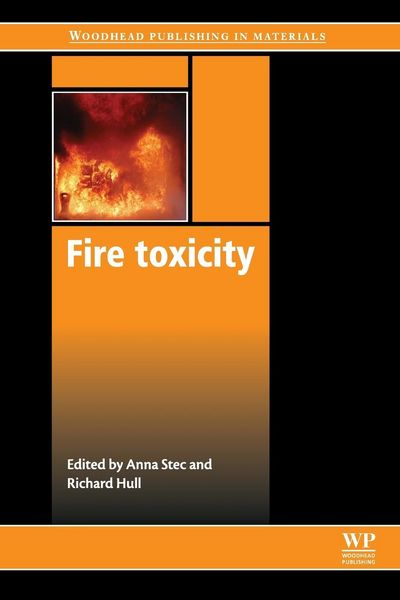
Fire Toxicity

251,99 €

inkl. gesetzl. MwSt., Versandkostenfrei


Beschreibung

Toxic fire effluents are responsible for the majority of fire deaths, and an increasing large majority of fire injuries, driven by the widespread and increasing use of synthetic polymers. Fire safety has focused on preventing ignition and reducing flame spread through reducing the rate of heat release,...

Beschreibung

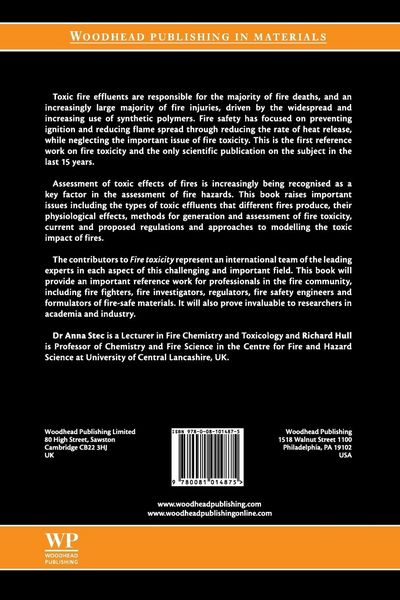
Toxic fire effluents are responsible for the majority of fire deaths, and an increasing large majority of fire injuries, driven by the widespread and increasing use of synthetic polymers. Fire safety has focused on preventing ignition and reducing flame spread through reducing the rate of heat release, while neglecting the important issue of fire toxicity. This is the first reference work on fire toxicity and the only scientific publication on the subject in the last 15 years.Assessment of toxic effects of fires is increasingly being recognised as a key factor in the assessment of fire hazards. This book raises important issues including the types of toxic effluents that different fires produce, their physiological effects, methods for generation and assessment of fire toxicity, current and proposed regulations and approaches to modelling the toxic impact of fires.The contributors to Fire toxicity represent an international team of the leading experts in each aspect of this challenging and important field. This book provides an important reference work for professionals in the fire community, including fire fighters, fire investigators, regulators, fire safety engineers, and formulators of fire-safe materials. It will also prove invaluable to researchers in academia and industry.

Rezension

"Represents the best currently available understanding and application of its subject matter to fire safety and is a welcome addition to the fire science literature." --Journal of Fire Sciences

Produktdetails

Einband

Taschenbuch

Erscheinungsdatum

26.03.2010

Herausgeber Anna Stec + weitere
Verlag Elsevier Science & Technology

Produktdetails

Einband

Taschenbuch

Erscheinungsdatum

26.03.2010

Herausgeber
Verlag Elsevier Science & Technology
Seitenzahl

722

Maße (L/B/H)

23,4/15,6/3,7 cm

Gewicht

996 g

Sprache

Englisch

ISBN

978-0-08-101487-5

EU-Ansprechpartner

Elsevier B.V.
Radarweg 29
1043 NX Amsterdam
NL
productsafety@elsevier.com

Herstelleradresse

Elsevier Science & Technology
London Wall 125
EC2Y 5AS London
GB
tradeorders@elsevier.com

Noch keine Bewertungen vorhanden

Verfassen Sie die erste Bewertung zu diesem Artikel

Helfen Sie anderen Kundinnen und Kunden durch Ihre Meinung.

Kundinnen und Kunden meinen

Bewertungen (0)

Die Leseprobe wird geladen.
  • Produktbild: Fire Toxicity
  • Produktbild: Fire Toxicity
  • Part 1 Introduction: Introduction to fire toxicity; Fire scenarios and combustion conditions. Part 2 Harmful effects of fire effluents: Hazards from smoke and irritants; Asphyxiant components of fire effluents; Effects of fire effluents on fire victims. Part 3 Biological assessment of fire toxicity: Experimental methods in combustion toxicology; Animal exposure studies; Application of human animal exposure studies to human fire safety; In vitro biological toxicity assessments for fire combustion products; A combined fire smoke and lung model test equipment. Part 4 Toxicity assessment using chemical analysis: Sampling and measurement of toxic fire effluents; Bench-scale generation of fire effluents; Large scale generation and characterisation of fire effluents; Effects of the material and fire conditions on toxic product yields; Estimation of toxicity during burning of common materials. Part 5 National and international fire safety regulations: Prescriptive regulations and tests considering the toxicity of fire effluents; An international standardised framework for prediction of fire gas toxicity. Part 6 Numerical simulation of fires and their hazards: Computer simulation of fire hazards and evacuation; Toxic hazard calculation models for use with fire effluent data; Modelling fire growth and toxic gas formation.