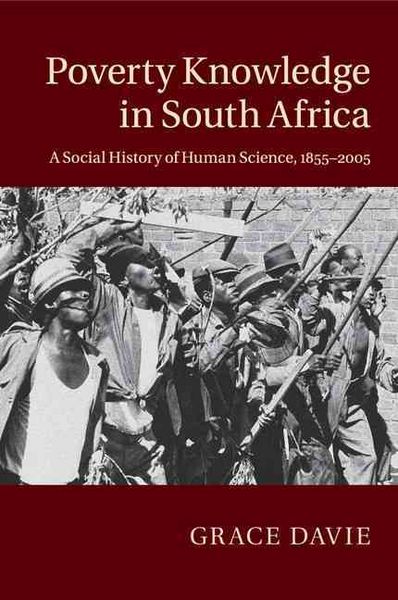
Poverty Knowledge in South Africa A Social History of Human Science, 1855–2005
-
- Hardcover
- Taschenbuch ausgewählt
- eBook
-
Sprache:Englisch
44,99 €
inkl. gesetzl. MwSt.,
Beschreibung
Produktdetails
Einband
Taschenbuch
Erscheinungsdatum
02.03.2015
Verlag
Cambridge AcademicSeitenzahl
346
Maße (L/B/H)
22,9/15,2/2 cm
Gewicht
520 g
Sprache
Englisch
ISBN
978-1-107-55173-2
Poverty is South Africa's greatest challenge. But what is 'poverty'? How can it be measured? And how can it be reduced if not eliminated? In South Africa, human science knowledge about the cost of living grew out of colonialism, industrialization, apartheid and civil resistance campaigns, which makes this knowledge far from neutral or apolitical. South Africans have used the Poverty Datum Line (PDL), Gini coefficients and other poverty thresholds to petition the state, to chip away at the pillars of white supremacy, and, more recently, to criticize the postapartheid government's failures to deliver on some of its promises. Rather than promoting one particular policy solution, this book argues that poverty knowledge teaches us about the dynamics of historical change, the power of racism in white settler societies, and the role of grassroots protest movements in shaping state policies and scientific categories. Readers will gain new perspectives on today's debates about social welfare, redistribution and human rights, and will ultimately find reasons to rethink conventional approaches to advocacy.
Noch keine Bewertungen vorhanden
Verfassen Sie die erste Bewertung zu diesem Artikel
Helfen Sie anderen Kundinnen und Kunden durch Ihre Meinung.
Kurze Frage zu unserer Seite
Vielen Dank für Ihr Feedback
Wir nutzen Ihr Feedback, um unsere Produktseiten zu verbessern. Bitte haben Sie Verständnis, dass wir Ihnen keine Rückmeldung geben können. Falls Sie Kontakt mit uns aufnehmen möchten, können Sie sich aber gerne an unseren Kund*innenservice wenden.
zum Kundenservice