KI-Beratung Beta

Produktbild: Eutrophication: Causes, Consequences and Control

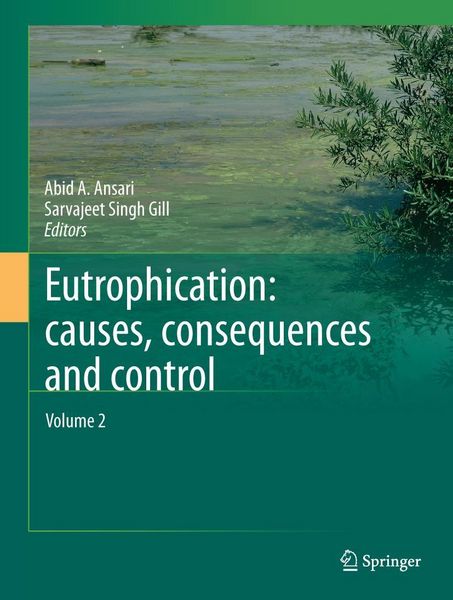
Eutrophication: Causes, Consequences and Control Volume 2

98,99 €

inkl. gesetzl. MwSt.

Beschreibung

Eutrophication continues to be a major global challenge and the problem of eutrophication and availability of freshwater for human consumption is an essential ecological issue. The global demand for water resources due to increasing population, economic developments, and emerging energy development schemes...

Beschreibung

Eutrophication continues to be a major global challenge and the problem of eutrophication and availability of freshwater for human consumption is an essential ecological issue. The global demand for water resources due to increasing population, economic developments, and emerging energy development schemes has created new environmental challenges for global sustainability. Accordingly, the area of research on eutrophication has expanded considerably in recent years. Eutrophication, acidification and contamination by toxic substances are likely to pose increasing threats to freshwater resources and ecosystems. The consequences of anthropogenic-induced eutrophication of freshwaters are severe deterioration of surface waters and growing public concern, as well as new interest among the scientific community. "Eutrophication: causes, consequences & control" provides the latest information on many important aspects of the processes of natural and accelerated eutrophication in major aquatic ecosystems around the world.

This book offers a cutting-edge resource for researchers and students alike who are studying eutrophication in various ecosystems. It presents the latest trends and developments in the field, including: global scenarios and local threats to the dynamics of aquatic ecosystems, economics of eutrophication, eutrophication in the great lakes of the Chinese pacific drainage basin, photoautotrophic productivity in eutrophic ecosystems, eutrophication's impacts on natural metal remediation in salt marshes, phytoplankton assemblages as an indicator of water quality in seven temperate estuarine lakes in southeast Australia, biogeochemical indicators of nutrient enrichments in wetlands - the microbial response as a sensitive indicator of wetland eutrophication, and ultraviolet radiation and bromide as limiting factors in eutrophication processes in semi-arid climate zones. Written by respected experts and featuring helpful illustrations andphotographs, "Eutrophication: causes, consequences & control" provides a concise and practical update on the latest developments in eutrophication.

Portrait

Abid A. Ansari is working as Assistant Professor in Department of Biology, Faculty of Science, University of Tabuk, Kingdom of Saudi Arabia. Dr. Ansari obtained his M.Sc. and Ph.D.in Environmental Botany from the Aligarh Muslim University, India in 2001 and 2005, respectively. Dr. Ansari's main area of research includes eutrophication, phytoremediation, aquatic ecology, utilization of aquatic plants in cleanup studies and aquatic biodiversity. Dr. Ansari has several research papers, review articles and book chapters to his credit in the journals of national and international repute and in edited books. He has edited a book namely Eutrophication: causes, consequences and control published by Springer, The Netherlands. Dr. Ansari is a regular reviewer of various National and International journals. He was awarded Environmentalist of the year by National Environmental Science Academy New Delhi in 2011. Dr. Ansari is working on development of sustainable phytoremediation systems to improve the quality of eutrophic waters. Sarvajeet Singh Gill is working as Assistant Professor in Centre for Biotechnology, MD University, Rohtak, Haryana. Dr. Gill's main area of research includes Genetic Engineering, Stress Physiology and Molecular Biology (Development of abiotic stress tolerant crop plants, the physiological, biochemical and molecular characterization of agronomically important plants under abiotic stress factors, involvement of mineral nutrients and other biotechnological approaches in the amelioration of abiotic stress effects in crop plants, use of a combination of genetic, biochemical, genomic and proteomic approaches to understand the responses of various components of antioxidant machinery to abiotic stress and stress signaling and stress tolerance in crop plants

Produktdetails

Format

PDF

Kopierschutz

Nein

Family Sharing

Nein

Text-to-Speech

Nein

Produktdetails

Format

PDF

Format

eBooks im PDF-Format haben eine festgelegte Seitengröße und eignen sich daher nur bedingt zum Lesen auf einem tolino eReader oder Smartphone. Für den vollen Lesegenuss empfehlen wir Ihnen bei PDF-eBooks die Verwendung eines Tablets oder Computers.

Kopierschutz

Nein

Kopierschutz

Dieses eBook können Sie uneingeschränkt auf allen Geräten der tolino Familie, allen sonstigen eReadern und am PC lesen. Das eBook ist nicht kopiergeschützt und kann ein personalisiertes Wasserzeichen enthalten. Weitere Hinweise zum Lesen von eBooks mit einem personalisierten Wasserzeichen finden Sie unter Hilfe/Downloads.

Family Sharing

Nein

Family Sharing

Mit Family Sharing können Sie eBooks innerhalb Ihrer Familie (max. sechs Mitglieder im gleichen Haushalt) teilen. Sie entscheiden selbst, welches Buch Sie mit welchem Familienmitglied teilen möchten. Auch das parallele Lesen durch verschiedene Familienmitglieder ist durch Family Sharing möglich. Um eBooks zu teilen oder geteilt zu bekommen, muss jedes Familienmitglied ein Konto bei Thalia oder einem anderen tolino-Buchhändler haben. Weitere Informationen finden Sie unter Hilfe/Family-Sharing.

Text-to-Speech

Nein

Text-to-Speech

Bedeutet Ihnen Stimme mehr als Text? Mit der Funktion Text-to-Speech können Sie sich im tolino webReader und in der aktuellen Thalia – Lesen & Hören App das eBook vorlesen lassen. Weitere Informationen finden Sie unter Hilfe/Text-to-Speech.

Erscheinungsdatum

19.11.2013

Herausgeber
Verlag Springer Netherlands
Seitenzahl

262 (Printausgabe)

Dateigröße

13098 KB

Sprache

Englisch

EAN

9789400778146

Barrierefreiheit
  • keine Information zur Barrierefreiheit bekannt

Noch keine Bewertungen vorhanden

Verfassen Sie die erste Bewertung zu diesem Artikel

Helfen Sie anderen Kundinnen und Kunden durch Ihre Meinung.

Kundinnen und Kunden meinen

Bewertungen (0)

Weitere Artikel finden Sie in

  • Produktbild: Eutrophication: Causes, Consequences and Control
  • 1. Eutrophication: Challenges and Solutions.- 2. Eutrophication: Global Scenario and Local Threat to Dynamics of Aquatic Ecosystems.- 3. Effects of Eutrophication.- 4. The Economics of Eutrophication.- 5. Eutrophication of Lakes.- 6. Lake Eutrophication and Plankton Food Webs.- 7. Environmental Impacts of Tourism on Lakes.- 8. Eutrophication in the Great Lakes of the Chinese Pacific Drainage Basin: Changes, Trends and Management.- 9. Photoautotrophic Productivity in Eutrophic Ecosystems.- 10. Seasonal and Spatial Nutrient Dynamics in Saronikos Gulf: The Impact of Sewage Effluents from Athens Sewage Treatment Plant.- 11. Eutrophication Impacts on Salt Marshes Natural Metal Remediation.- 12. Household Detergents Causing Eutrophication in Freshwater Ecosystems.- 13. Estimating Fish Production in the Itaipu Reservoir (Brazil): The Relationship between Fish Trophic Guilds, Limnology and Application of Morphoedaphic Index.- 14. Phytoplankton Assemblages as an Indicator of Water Quality in Seven Temperate Estuarine Lakes in South-East Australia.- 15. Biogeochemical Indicators of Nutrient Enrichments in Wetlands: The Microbial Response as a Sensitive Indicator of Wetland Eutrophication.- 16. Task of Mineral Nutrients in Eutrophication.- 17. Phytoremediation Systems for the Recovery of Nutrients from Eutrophic Waters.- 18. Ultra Violet Radiation and Bromide as Limiting Factors in Eutrophication Processes in Semi-Arid Climate Zones.¿