
KI-Beratung Beta

  • Produktbild: Blackburn: Nutritional Oncology
  • Produktbild: Blackburn: Nutritional Oncology

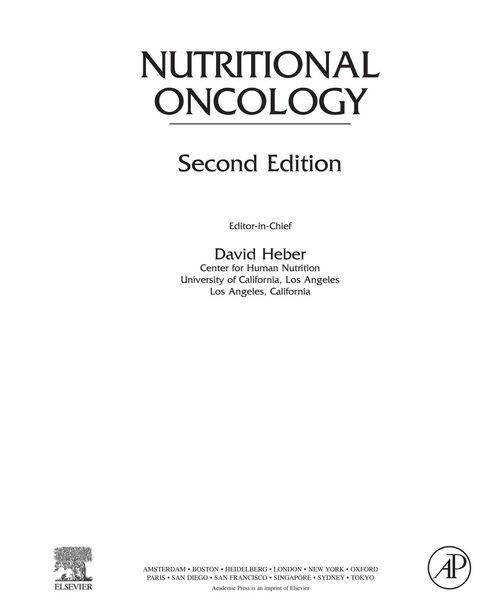
Blackburn: Nutritional Oncology

205,99 €

inkl. gesetzl. MwSt., Versandkostenfrei


Beschreibung

Nutritional oncology is an increasingly active interdisciplinary field where cancer is investigated as both a systemic and local disease originating with the changes in the genome and progressing through a multi-step process which may be influenced at many points in its natural history by nutritional...

Beschreibung

Nutritional oncology is an increasingly active interdisciplinary field where cancer is investigated as both a systemic and local disease originating with the changes in the genome and progressing through a multi-step process which may be influenced at many points in its natural history by nutritional factors that could impact the prevention of cancer, the quality of life of cancer patients, and the risk of cancer recurrence in the rapidly increasing population of cancer survivors.
Since the first edition of this book was published in 1999, the idea that there is a single gene pathway or single drug will provide a cure for cancer has given way to the general view that dietary/environmental factors impact the progression of genetic and cellular changes in common forms of cancer. This broad concept can now be investigated within a basic and clinical research context for specific types of cancer. This book attempts to cover the current available knowledge in this new field of nutritional oncology written by invited experts. This book attempts to provide not only the theoretical and research basis for nutritional oncology, but will offer the medical oncologist and other members of multidisciplinary groups treating cancer patients practical information on nutrition assessment and nutritional regimens, including micronutrient and phytochemical supplementation. The editors hope that this volume will stimulate increased research, education and patient application of the principles of nutritional oncology.
NEW TO THIS EDITION:
* Covers hot new topics of nutrigenomics and nutrigenetics in cancer cell growth
* Includes new chapters on metabolic networks in cancer cell growth, nutrigenetics and nutrigenomics
* Presents substantially revised chapters on breast cancer and nutrition, prostate cancer and nutrition, and colon cancer and nutrition
* Includes new illustrations throughout the text, especially in the breast cancer chapter

Produktdetails

Einband

Gebundene Ausgabe

Erscheinungsdatum

07.04.2006

Herausgeber Vay Liang W. Go + weitere
Verlag Elsevier LTD

Produktdetails

Einband

Gebundene Ausgabe

Erscheinungsdatum

07.04.2006

Herausgeber
Verlag Elsevier LTD
Seitenzahl

848

Maße (L/B/H)

28,7/22,5/4,5 cm

Gewicht

2158 g

Auflage

2. Auflage

Sprache

Englisch

ISBN

978-0-12-088393-6

Noch keine Bewertungen vorhanden

Verfassen Sie die erste Bewertung zu diesem Artikel

Helfen Sie anderen Kundinnen und Kunden durch Ihre Meinung.

Kundinnen und Kunden meinen

Bewertungen (0)

Die Leseprobe wird geladen.
  • Produktbild: Blackburn: Nutritional Oncology
  • Produktbild: Blackburn: Nutritional Oncology
  • EDITOR-IN-CHIEF

    Contributing Authors

    Preface

    Introduction: The Principles of Nutritional Oncology

    I: Biology of Nutrition and Cancer

    Chapter 1: Fundamentals of Human Nutrition

    Chapter 2: Nutrigenomics and Nutrigenetics

    Chapter 3: Genetics and Epigenetics in Cancer Biology

    Chapter 4: Metabolic Networks in Cancer Cells

    Chapter 5: Energy Balance and Cancer

    II: Epidemiology of Nutrition and Cancer

    Chapter 6: Nutritional Epidemiology

    Chapter 7: Fruit and Vegetable Consumption and Cancer

    Chapter 8: Are Whole Grains Protective Against a Variety of Cancers?

    Chapter 9: Obesity and Cancer Risk

    Chapter 10: Nutrition and Tobacco-Related Cancers

    Chapter 11: Alcohol and Cancer

    Chapter 12: Environmental Toxins, Nutrition, and Cancer

    III: Biological Approaches to Investigating Nutrition and Cancer

    Chapter 13: Endocrine and Paracrine Factors in Carcinogenesis

    Chapter 14: Oxidation and Antioxidation in Cancer

    Chapter 15: Thiols in Cancer

    Chapter 16: Principles of Tumor Immunology

    Chapter 17: Animal Models in Nutritional Oncology Research

    IV: Gene-Nutrient Interaction and Cancer Prevention

    Chapter 18: The Challenge of Nutrition in Cancer Prevention

    Chapter 19: Dietary Assessment

    Chapter 20: Prostate Cancer

    Chapter 21: Breast Cancer

    Chapter 22: Skin Cancer

    Chapter 23: Colon Cancer

    Chapter 24: Gastric Cancer

    Chapter 25: Pancreatic Cancer

    Chapter 26: Bladder Cancer

    Chapter 27: Differentiation Induction in Leukemia and Lymphoma

    V: Bioactive Food Components and Botanical Approaches to Cancer

    Chapter 28: Dietary Supplements in Cancer Prevention and Therapy

    Chapter 29: Dietary Fiber and Carbohydrates

    Chapter 30: Dietary Lipids

    Chapter 31: Calcium and Vitamin D

    Chapter 32: Soy Isoflavones

    Chapter 33: Selenium and Cancer Prevention

    Chapter 34: Glucosinolates

    Chapter 35: Green Tea

    Chapter 36: Garlic

    Chapter 37: Berries

    Chapter 38: Isoprenoids and Novel Inhibitors of Mevalonate Pathway Activities

    VI: Nutritional Assessment and Support of the Cancer Patient

    Chapter 39: Cancer Anorexia and Cachexia

    Chapter 40: Weight Management in the Breast Cancer Survivor

    Chapter 41: Nutrition Support of the Adult Cancer Patient

    Chapter 42: Assessing Endocrine Effects of Cancer and Ectopic Hormone Syndromes

    Chapter 43: Counseling the Cancer Survivor

    Chapter 44: Nutritional Support and Quality of Life

    VII: Nutritional Implementation Guidelines and Practice

    Chapter 45: Modern Statistical Methods in Clinical Nutrition

    Chapter 46: Evidence-based Practice Management in Cancer Prevention and Treatment

    Chapter 47: Dietary Guidelines in Cancer Prevention

    Chapter 48: Dietary Interventions

    Chapter 49: Future Directions in Cancer and Nutrition Research: Gene-Nutrient Interactions, Networks, and the Xenobiotic Hypothesis

    Index