KI-Beratung Beta

Gutscheinbedingungen

**Gültig bis 18.11.2026 auf englischsprachige Klassiker (klassiker-32728) online auf thaalia.live und in der Thalia App. Einzelne Artikel können ausgeschlossen sein. Ausgenommen sind preisgebundene Artikel & eBooks. Pro Einkauf einmal einlösbar. Click & Collect nur bei Onlinevorabzahlung möglich. Keine Barauszahlung. Nicht kombinierbar mit anderen Aktionen und Gutscheinen. Gutschein wird auf max. 500€ Bestellwert angerechnet. Nicht gültig für Geschenkkarten, Versandkosten und Services.

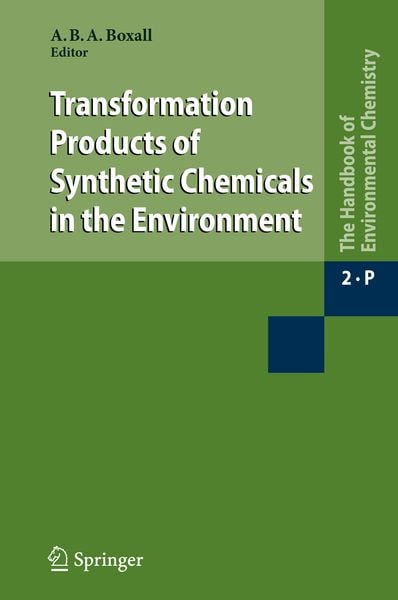
  • Produktbild: Transformation Products of Synthetic Chemicals in the Environment
  • Produktbild: Transformation Products of Synthetic Chemicals in the Environment
Band 2

Transformation Products of Synthetic Chemicals in the Environment

198,99 €

inkl. gesetzl. MwSt., Versandkostenfrei


Beschreibung

Following release to the environment, synthetic chemicals may be degraded by biotic and abiotic processes. The degradation of the chemical can follow a plethora of pathways and a range of other substances can be formed via thesedifferentpathways(e.g.[1]).Anumberoftermshavebeenusedforthese substances...

Beschreibung

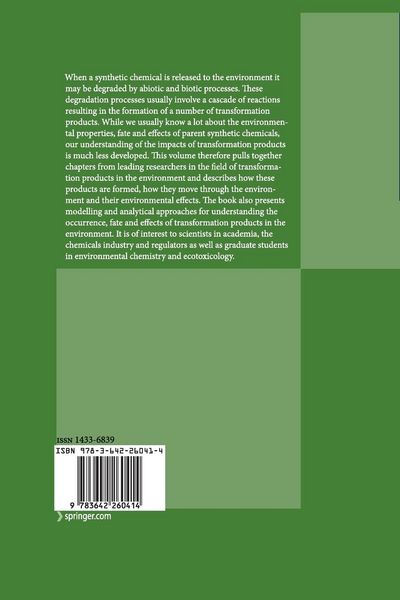
Following release to the environment, synthetic chemicals may be degraded by biotic and abiotic processes. The degradation of the chemical can follow a plethora of pathways and a range of other substances can be formed via thesedifferentpathways(e.g.[1]).Anumberoftermshavebeenusedforthese substances including metabolites, degradates and transformation products in this book we use the term transformation products. While we often know a lot about the environmental properties and effects of the parent synthetic chemical, we know much less about the transformationproducts. Transformationproductscanbehave very differently fromtheparent c- pound (e.g. [2]). For example, selected transformation products are much more persistent than their associated parent compound in soils, waters and sediments andsomemaybetransported aroundthelocal,regionalandglobal environmentstoadifferentextentthantheparentcompound.Transformation products can also have very different toxicities than the parent compound (e.g. [3]) and in some cases transformation products can be orders of mag- tude more toxic than their parent compound; although this situation is rare. The environmental risks of transformation products can therefore be very different than the risks of the parent compound. Thepotentialenvironmentalimpactsoftransformationproductsarerec- nised by many regulatory assessment schemes. For example, in the EU, pes- cideproducersarenotonlyrequiredtoassessthefateandeffectsoftheparent pesticide but are also required to assess the potential adverse effects of major metabolitesandminor metabolitesthat aredeemed tobeofconcern[4]. S- ilar requirements also exist for new human and veterinary pharmaceuticals and biocides (e.g. [5]). However, for many older substances and many other substance classes (e.g. industrial chemicals), data on the environmental risks of transformationproductscan be limited or non-existent.

Produktdetails

Einband

Taschenbuch

Erscheinungsdatum

14.03.2012

Abbildungen

XIV, 249 p.

Herausgeber Alistair Boxall

Produktdetails

Einband

Taschenbuch

Erscheinungsdatum

14.03.2012

Abbildungen

XIV, 249 p.

Herausgeber Alistair Boxall
Verlag Springer Berlin
Seitenzahl

249

Maße (L/B/H)

23,5/15,5/1,5 cm

Gewicht

406 g

Auflage

2009

Sprache

Englisch

ISBN

978-3-642-26041-4

Herstelleradresse

Springer-Verlag KG
Sachsenplatz 4-6
1201 Wien
AT

Email: ProductSafety@springernature.com

Noch keine Bewertungen vorhanden

Verfassen Sie die erste Bewertung zu diesem Artikel

Helfen Sie anderen Kundinnen und Kunden durch Ihre Meinung.

Kundinnen und Kunden meinen

Bewertungen (0)

  • Produktbild: Transformation Products of Synthetic Chemicals in the Environment
  • Produktbild: Transformation Products of Synthetic Chemicals in the Environment
  • Formation, Detection and Occurrence of Transformation Products.- Mechanisms of Degradation of Synthetic Chemicals.- Predicting the Persistence of Organic Compounds.- Analyzing transformation products of synthetic chemicals.- Occurrence of Transformation Products in the Environment.- Exposure of Transformation Products.- Fate of Transformation Products of Synthetic Chemicals.- Modelling Environmental Exposure to Transformation Products of Organic Chemicals.- Treatment of Transformation Products.- Effects of Transformation Products.- Ecotoxicity of Transformation Products.- Predicting the Ecotoxicological Effects of Transformation Products.