KI-Beratung Beta

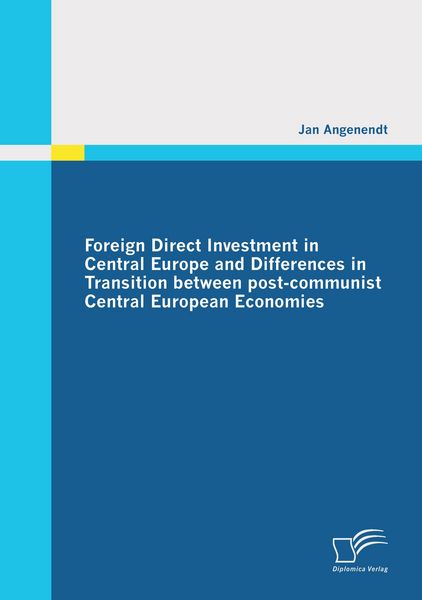
Produktbild: Foreign Direct Investment in Central Europe and Differences in Transition between post-communist Central European Economies

Foreign Direct Investment in Central Europe and Differences in Transition between post-communist Central European Economies

38,00 €

inkl. gesetzl. MwSt., Versandkostenfrei


Beschreibung

The transition process from a centrally planned to a market economy followed a very different path in East Germany compared to all other former communist countries. The German Democratic Republic acceded the Federal Republic of Germany in 1990, while other former socialist countries in Central and Eastern...

Beschreibung

The transition process from a centrally planned to a market economy followed a very different path in East Germany compared to all other former communist countries. The German Democratic Republic acceded the Federal Republic of Germany in 1990, while other former socialist countries in Central and Eastern Europe (CEE) had to start from square one after becoming independent from the USSR. In contrast to other post-soviet countries, East Germany subsequently received massive transfers from the Western part of the country. A significant part of these transfers was invested into infrastructure improvement, while a larger share was spent for consumption, raising the purchasing power in the East of Germany, allowing it to sustain a higher wage level and living standard than would have been economically possible without aid from the West.
Twenty years after the breakdown of the iron curtain and the reunification of Germany, the infrastructure in the Eastern part of the country is en par with the West. The East German wage level remains only slightly lower than the Western level (as does productivity), but is significantly higher than in neighbouring post-communist CEE-countries. Because of these differences in economic transition, it can be expected that East Germany attracts a different kind of foreign direct investment compared to other CEE-countries. The objective of this dissertation is to empirically identify the factors affecting foreign direct investment into the region and to discuss the implications of the empirical findings for regional and national economic policy. The "region" is represented in this book by East Germany and three of its Central-European neighbour-countries, the Czech Republic, Poland and Hungary.

Produktdetails

Einband

Taschenbuch

Erscheinungsdatum

07.06.2011

Abbildungen

w. 12 ill.

Verlag Diplomica Verlag GmbH

Produktdetails

Einband

Taschenbuch

Erscheinungsdatum

07.06.2011

Abbildungen

w. 12 ill.

Verlag Diplomica Verlag GmbH
Seitenzahl

64

Maße (L/B/H)

27/19/0,5 cm

Gewicht

176 g

Auflage

1. Auflage

Sprache

Englisch

ISBN

978-3-8428-5896-1

Herstelleradresse

Disserta Verlag
Hermannsthal 119k
22119 Hamburg
DE

Email: info@bedey-media.de

Noch keine Bewertungen vorhanden

Verfassen Sie die erste Bewertung zu diesem Artikel

Helfen Sie anderen Kundinnen und Kunden durch Ihre Meinung.

Kundinnen und Kunden meinen

Bewertungen (0)

  • Produktbild: Foreign Direct Investment in Central Europe and Differences in Transition between post-communist Central European Economies