KI-Beratung Beta

Produktbild: Brain-Computer Interfaces
- 12%

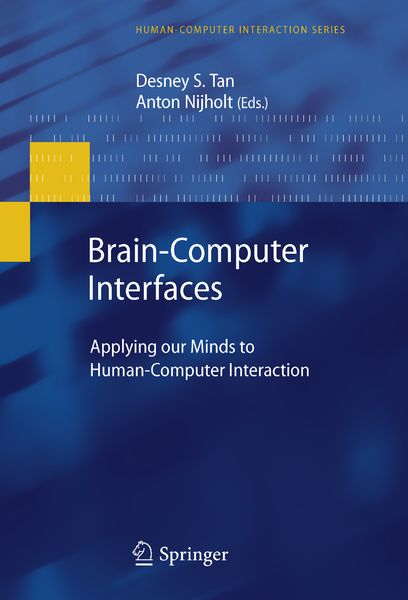
Brain-Computer Interfaces Applying our Minds to Human-Computer Interaction

12% sparen

95,99 € UVP 109,99 €

inkl. gesetzl. MwSt., Versandkostenfrei


Beschreibung

For generations, humans have fantasized about the ability to create devices that can see into a person’s mind and thoughts, or to communicate and interact with machines through thought alone. Such ideas have long captured the imagination of humankind in the form of ancient myths and modern science fiction...

Beschreibung

For generations, humans have fantasized about the ability to create devices that can see into a person’s mind and thoughts, or to communicate and interact with machines through thought alone. Such ideas have long captured the imagination of humankind in the form of ancient myths and modern science fiction stories. Recent advances in cognitive neuroscience and brain imaging technologies have started to turn these myths into a reality, and are providing us with the ability to interface directly with the human brain. This ability is made possible through the use of sensors that monitor physical processes within the brain which correspond with certain forms of thought.Brain-Computer Interfaces: Applying our Minds to Human-Computer Interaction broadly surveys research in the Brain-Computer Interface domain. More specifically, each chapter articulates some of the challenges and opportunities for using brain sensing in Human-Computer Interaction work, as well as applying Human-Computer Interaction solutions to brain sensing work. For researchers with little or no expertise in neuroscience or brain sensing, the book provides background information to equip them to not only appreciate the state-of-the-art, but also ideally to engage in novel research. For expert Brain-Computer Interface researchers, the book introduces ideas that can help in the quest to interpret intentional brain control and develop the ultimate input device. It challenges researchers to further explore passive brain sensing to evaluate interfaces and feed into adaptive computing systems. Most importantly, the book will connect multiple communities allowing research to leverage their work and expertise and blaze into the future.

Rezension

From the reviews:

“Human-computer interaction (HCI) is a maturing and unfolding field of basic research and practical applications. Need a broad-based introductory survey of brain-computer interfaces (BCIs)? This collection of chapters for individuals without a background in neuroscience or brain sensing is what you need. Students and designers will find this material useful. … Brief discussions with numerous references to more detailed research are among the strengths of this book. … Anyone interested in BCI will want to begin with this collection.” (Brad Reid, ACM Computing Reviews, February, 2011)

Produktdetails

Einband

Gebundene Ausgabe

Erscheinungsdatum

23.06.2010

Abbildungen

XXIV, 277 p.

Herausgeber Desney S. Tan + weitere

Produktdetails

Einband

Gebundene Ausgabe

Erscheinungsdatum

23.06.2010

Abbildungen

XXIV, 277 p.

Herausgeber
Verlag Springer London
Seitenzahl

277

Maße (L/B/H)

24,3/16,7/2,5 cm

Gewicht

590 g

Auflage

2010 edition

Sprache

Englisch

ISBN

978-1-84996-271-1

Herstelleradresse

Libri GmbH
Europaallee 1
36244 Bad Hersfeld
DE

Email: gpsr@libri.de

Noch keine Bewertungen vorhanden

Verfassen Sie die erste Bewertung zu diesem Artikel

Helfen Sie anderen Kundinnen und Kunden durch Ihre Meinung.

Kundinnen und Kunden meinen

Bewertungen (0)

  • Produktbild: Brain-Computer Interfaces
  • Overview and Techniques.- Brain-Computer Interfaces and Human-Computer Interaction.- Neural Control Interfaces.- Could Anyone Use a BCI?.- Using Rest Class and Control Paradigms for Brain Computer Interfacing.- EEG-Based Navigation from a Human Factors Perspective.- Applications.- Applications for Brain-Computer Interfaces.- Direct Neural Control of Anatomically Correct Robotic Hands.- Functional Near-Infrared Sensing (fNIR) and Environmental Control Applications.- Cortically-Coupled Computer Vision.- Brain-Computer Interfacing and Games.- Brain Sensing in Adaptive User Interfaces.- Enhancing Human-Computer Interaction with Input from Active and Passive Brain-Computer Interfaces.- Brain-Based Indices for User System Symbiosis.- From Brain Signals to Adaptive Interfaces: Using fNIRS in HCI.- Tools.- MATLAB-Based Tools for BCI Research.- Using BCI2000 for HCI-Centered BCI Research.