KI-Beratung Beta

Produktbild: European States and the Euro

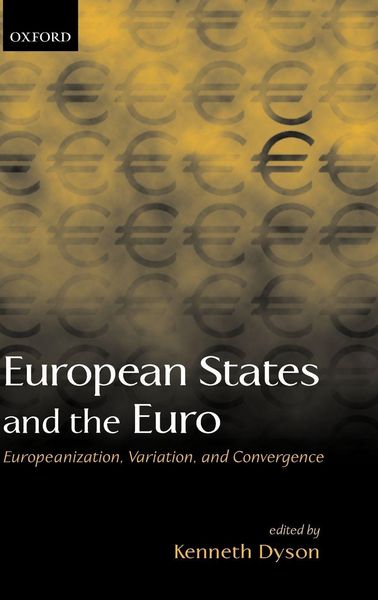
European States and the Euro Europeanization, Variation, and Convergence

128,99 €

inkl. gesetzl. MwSt., Versandkostenfrei


Beschreibung

With Economic and Monetary Union, the European Union has embarked on one of the biggest projects in its history. Previous literature has focused on how EMU came into being and on the policy issues that it raises. European States and the Euro seeks to move the discussion forwards by offering the first...

Beschreibung

With Economic and Monetary Union, the European Union has embarked on one of the biggest projects in its history. Previous literature has focused on how EMU came into being and on the policy issues that it raises. European States and the Euro seeks to move the discussion forwards by offering the first systematic evaluation of how it is affecting EU states, both members and non-members of the Euro-Zone. It is the first book to explicitly situate EMU in the growing literature on Europeanization.
It examines the effects on public policies, political structures, discourses, and identities. The book seeks to identify the scope of EMU's effects, the direction that it imparts to political and policy changes, the mechanisms by which it produces its effects, and the role of domestic institutions, political leadership and specific forms of discourse in shaping responses. In addition, the book assesses how, and with what effects, EMU is affecting key policy sectors¿labour markets and wages, welfare states, and financial market governance. What conditions the degree of convergence discernible in these sectors? Finally, the book seeks to 'contextualize' EMU by assessing its effects both in comparison with other variables like globalization and in a historical perspective of the European Monetary System as a 'training ground'. The book combines sectoral and country case studies with a thematic treatment by recognized experts in their fields. It moves from globalization, through EU-level changes, to member states and finally to specific sectors.
The main conclusions are that EMU is most important in affecting the timing, tempo and rhythm of domestic change¿that these changes are experienced pre-eminently at the level of policy; that it strengthens pressures for convergence; but that different domestic institutional arrangements and discourses lead to variations in policy processes and effects and in the way change is 'framed'. In particular, whilst EMU contains a neo-liberalizing tendency exhibited most clearly in financial market effects, it is not to be characterized as a neo-liberal project by means of which the EU is becoming an economic and social space simply converging around Anglo-American market capitalism.

Produktdetails

Einband

Gebundene Ausgabe

Erscheinungsdatum

07.03.2002

Herausgeber Kenneth Dyson
Verlag Oxford University Press

Produktdetails

Einband

Gebundene Ausgabe

Erscheinungsdatum

07.03.2002

Herausgeber Kenneth Dyson
Verlag Oxford University Press
Seitenzahl

432

Maße (L/B/H)

24/16,1/2,8 cm

Gewicht

760 g

Sprache

Englisch

ISBN

978-0-19-925026-4

Herstelleradresse

Libri GmbH
Europaallee 1
36244 Bad Hersfeld
DE

Email: gpsr@libri.de

Noch keine Bewertungen vorhanden

Verfassen Sie die erste Bewertung zu diesem Artikel

Helfen Sie anderen Kundinnen und Kunden durch Ihre Meinung.

Kundinnen und Kunden meinen

Bewertungen (0)

  • Produktbild: European States and the Euro
    • 1. Introduction: EMU as Integration, Europeanization and Convergence

    • 1 European and Global Contexts

    • 2. Global Integration, EMU, and Monetary Governance in the European Union: The Political Economy of the 'Stability Culture'

    • 3. EMU's Impact on National Institutions: Fusion towards an Economic Governance or Fragmentation?

    • 4. The Political Economy of Fiscal Policy under Monetary Union

    • 2 Domestic Political and Policy Contexts

    • 5. Britain and EMU

    • 6. EMU: A Danish Delight and Dilemma

    • 7. The French State in the Euro-Zone; 'Modernization' and Legitimizing

    • 8. Germany and the Euro: Redefining EMU, Handling Paradox, and Managing Uncertainty and Contingency

    • 9. The Italian State and the Euro: Institutions, Discourse and Policy Regimes

    • 10. The Netherlands and EMU: A Small Open Economy in Search of Prosperity

    • 3 Sectors, States and EMU

    • 11. Politics, Banks and Financial Market Governance in the Euro-Zone

    • 12. The Euro and Labour Market and Wage Policies

    • 13. Why EMU Is (or May Be) Good for European Welfare States

    • 14. Conclusion: European States and Euro Economic Governance