KI-Beratung Beta

Gutscheinbedingungen

**Gültig am 20.11.2026 ab einem Mindestbestellwert von 30€ auf Spielzeug, Schreibwaren, Filme, Geschenke & Trends, Musik, tolino eReader & Zubehör, Hörbücher und Hörbuch-Downloads, nicht preisgebundene Bücher und Kalender online auf thaalia.live und in der Thalia App. Einzelne Artikel können ausgeschlossen sein. Aufgrund der Buchpreisbindung sind deutschsprachige Bücher und eBooks ausgenommen. Zusätzlich ausgenommen sind Abos & Flatrates, Games, Geschenkkarten/-boxen, Shelfies, Software, Zeitschriften sowie einzelne Artikel von tonies®. Pro Einkauf einmal einlösbar. Click & Collect nur bei Onlinevorabzahlung möglich. Keine Barauszahlung. Nicht kombinierbar mit anderen Aktionen und Gutscheinen. Gutschein wird auf max. 500€ Bestellwert angerechnet. Nicht gültig für Versandkosten und Services. Preisgebundene Artikel sind vom Mindestbestellwert ausgeschlossen.

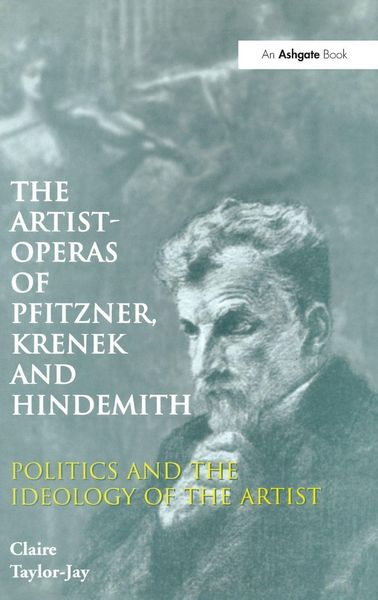
Produktbild: The Artist-Operas of Pfitzner, Krenek and Hindemith

The Artist-Operas of Pfitzner, Krenek and Hindemith Politics and the Ideology of the Artist

282,99 €

inkl. gesetzl. MwSt., Versandkostenfrei


Beschreibung

This is the first book-length study of the genre of 'artist-opera', in which the work's central character is an artist who is uncomfortable with his place in the world. It investigates how three such operas (Pfitzner's Palestrina (1915), Krenek's Jonny spielt auf (1926) and Hindemith's Mathis der Maler...

Beschreibung

This is the first book-length study of the genre of 'artist-opera', in which the work's central character is an artist who is uncomfortable with his place in the world. It investigates how three such operas (Pfitzner's Palestrina (1915), Krenek's Jonny spielt auf (1926) and Hindemith's Mathis der Maler (1935)) contributed to the debate in early twentieth-century Germany about the place of art and the artist in modern society, and examines how far the artist-character may be taken as functioning as a persona for the real composer of the work. Because of their concern with the place of art within society, the works are also engaged with inherently political questions, and each opera is read in the light of the political context of its time: conservatism circa World War I, Americanism and democracy, and the rise of National Socialism.

Produktdetails

Einband

Gebundene Ausgabe

Erscheinungsdatum

21.05.2004

Verlag Taylor and Francis
Seitenzahl

234

Produktdetails

Einband

Gebundene Ausgabe

Erscheinungsdatum

21.05.2004

Verlag Taylor and Francis
Seitenzahl

234

Maße (L/B/H)

23,4/15,6/1,4 cm

Gewicht

503 g

Sprache

Englisch

ISBN

978-0-7546-0578-2

Herstelleradresse

Libri GmbH
Europaallee 1
36244 Bad Hersfeld
DE

Email: gpsr@libri.de

Noch keine Bewertungen vorhanden

Verfassen Sie die erste Bewertung zu diesem Artikel

Helfen Sie anderen Kundinnen und Kunden durch Ihre Meinung.

Kundinnen und Kunden meinen

Bewertungen (0)

Die Leseprobe wird geladen.
  • Produktbild: The Artist-Operas of Pfitzner, Krenek and Hindemith
  • Contents: Introduction: The relationship of artist and society: historical perspectives; Artist and society in the early 20th century; Artist-operas as self-(re)presentation; Precursors of the 20th-century artist-opera; The artist-opera and politics; Pfitzner, Palestrina, and the nonpolitical composer: The context of Palestrina; Political conservatism c. World War I; Conservative politics and art (1): Thomas Mann's Betrachtungen eines Unpolitischen; Conservative politics and art (2): Pfitzner's aesthetics; Conservatism in Palestrina; The character of Palestrina as 'nonpolitical'; The Council of Trent as 'political'; Krenek spielt auf: Jonny, Jazz and the modern composer: The context of Jonny spielt auf: politics and culture in the Weimar Republic; Americanism and politics; Americanism, mass culture and jazz; Krenek and the meaning of popular music; The influence of Paul Bekker; Artists and society in Jonny spielf auf; Max's transformation; Krenek and Jonny spielf auf; Painting and politics in Hindemith's Mathis der Maler: The context of Mathis der Maler: Germany in the 1930s; Aspects of national socialist ideology; Hindemith's aesthetics; Artist and society in Mathis der Maler; Hindemith and the Third Reich; Conclusion: artistic identity as performative; Appendix; Bibliography; Index.